On my journey to discover what gets me writing versus what doesn’t, I found myself getting frustrated by the lack of hours there are in the day. If only there were 26 hours in a day instead of 24, I’d think. Or maybe 34… .
I’ve got it! I can stay up all night and belt out a good chunk of novel while my wife and children are sleeping, and then I can shamble through my workday with bags under my eyes. Now there’s a plan.
I would even fantasize about being able to stop time for everyone and everything but myself (and maybe the power plant workers … and the electricity leading up to my house … and the circuitry in my computer … and pause my age), so I could spend as much time as I needed in limbo to type out an entire book in what would amount to just one second in real life. The world would just have wait for me (without knowing they were paused, of course). And once they were unpaused, they would go about their normal business none-the-wiser, but I would be one completed manuscript richer.
Or maybe I could reset time. For example, during the day I could veg out and do time wasters to my heart’s content, then I could RESET the day back to morning, and this time I’d be serious and write.
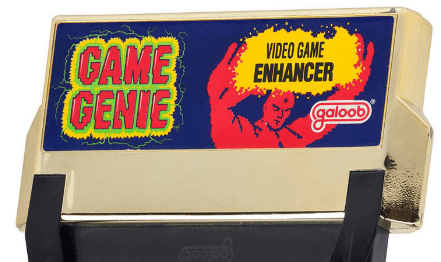
A cheat code for life. That’s what I needed. Of course, everybody wants that, even though it wouldn’t be fair to everybody else.
Well, life doesn’t work like that. Truth was, I had time management and priority issues.
A good friend of mine suggested I figure out what I’m doing in my daily life that’s less important than writing, designate it so, and therefore, the logic dictates that writing would naturally get pushed higher on my list of priorities.
That sounded simple enough.
I was playing a few mobile apps at the time, both of which were total time sinks. (What mobile apps aren’t, these days?) But this new way of thinking had me turning my back on both of them, because they simply weren’t as important to me as writing. And they certainly weren’t more important than spending time with my family.
It felt empowering deleting those apps, freeing myself from their shackles. And to this day, I’ve never played them again. Now I do still have one app that I play, but it’s a far less time-intensive affair, my kids love it, and I make sure to only play it when I’m stranded and bored somewhere, or in bed and about to fall asleep.
Then there’s social media. I realize asking someone to not use Facebook, Twitter, and other major platforms is asking a lot these days. Even writers have to use social media to help market themselves, after all.
But I took a good, hard look at all the groups I follow and started unfollowing the redundant ones. I mainly used Facebook for hobbies, such as writing and video game collecting groups. But the more people and groups I followed, the less time there was in the day to write. Funny how that works.
For instance, do I really need to belong to THREE Sega Genesis groups? Nah, just my favorite of the three is fine.
Do I even play Magic: the Gathering anymore? Nope. Then why am I in twelve MtG groups? Well, I joined them to sell my cards, but they’re all sold now. Easy decision. Left the groups, freed up more time in my daily life.
And then there’s folks who post a lot of time-wastey things, like unfunny memes. So I unfollowed them.
And there’s folks who used to love to bicker with me and would somehow rope me into fruitless hour-long debates. I recognized these people for the timesinks they were and blocked them. It was nothing personal. I just didn’t have time for them anymore, and I didn’t trust myself to just ignore them every time they post a wall of text.
Then I thought about forsaking the unholy ground that is Facebook altogether, moving to alternative platforms that weren’t as busy, and perhaps more intimate, like MeWe. You know, places that have EULAs that aren’t completely draconian. That’s always a good move.
Speaking of places with draconian EULAs, I took a look at the YouTube channels I follow and did some pruning there, too.
There were times when I’d get back into writing, then fall into the trap of stumbling upon huge 40 video treasure troves about writing. Then I’d feel like I need to watch every single one of these videos, or else I might be writing without some key critical knowledge. Of course, by the time I was done with the videos, I’d feel drained, my writing spirit would be spent, and I began to realize I’d probably learned a whole lot less than if I would’ve just written during that time instead.
But yes, same idea as with Facebook. I picked out a few of my favorite YouTube channels to stay subscribed to, and unsubbed from the rest.
The biggest hurdle for me was video games. I knew it wasn’t an important pastime, but it had developed into a crutch I’d leaned on since I was a kid. It had formed into a habit, and had maybe even become an addiction. But this new frame of mind had me re-evaluating what games I really needed to play.
Is playing this game more important than writing? No.
And is playing through this older game for the millionth time more important than writing? Certainly not.
And for what remained, I could simply Get It Out Of My System.
It had me re-thinking everything. One key decision I made was to draw the line for collecting. I decided I didn’t want to collect–or even keep up with–anything past the Playstation 3 era. No PS4 or PS5, no XBox One, no Nintendo Switch. (And there’s a lot of reasons for that, which I may get into some other time.)
Staying “retro” has freed up a lot of time and money. While I wasn’t willing to give up on video gaming entirely, I’m more judicious about what I play and when I play it, and that has freed up an immense amount of time to not only write, but spend more time with my family.
So, as you go through the motions of the day, maybe you can also start thinking about whether or not you’re doing something less important than writing. Is refreshing that social media page more important than writing your book? For me, this frame of mind has felt like a “cheat code”, and it’s given me more of my life back. Maybe it could do the same for you.
 Nick Enlowe
One thought on “Figuring Out What Works: Prioritizing Writing – Replacing This for That”