
Only one of these staves truly and accurately represents medicine, but which one? (Hint: If you live in the United States, your guess is probably going to be wrong.)
The road to understanding the answer to the above question is paved in gnosis, and it is this same road that leads to understanding the depth of depravity that “works of art” like Promethea are trying to convey and use to “shape young minds”. A plus, however, is that understanding the Rod/Staff of Caduceus could help you with your writing … in theory. But posting about both staves at once would make for far too long a post. So for now, let’s focus on…
The Staff of Asclepius
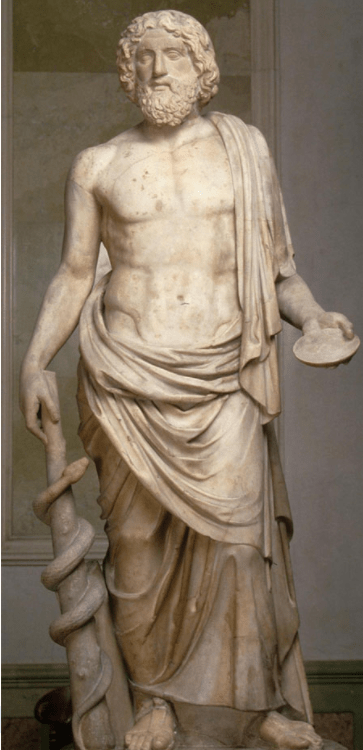
Long ago, Asclepian temples were used to administer healthcare. They were named after Asclepius, the Greek god of medicine. Hippocrates, who went on to become the most renowned physician of all-time, was an Asclepian priest. (Hippocrates? Harpocrates? Interesting…)
The god Asclepius (Asklepios) seemed to exist before written word existed, and was mentioned in Homer’s The Illiad. During the Trojan War, Paris wounded Menaleus with an arrow. It was one of Asclepius’ two sons, both heroes of the war, who removed the arrow and applied the healing salve which allowed Menaleus to recover.
Apollo, son of Zeus (and god of many things, including Olympic archery and the protection of the young), was in love with a mortal woman from Thessaly named Coronis (Koronis).
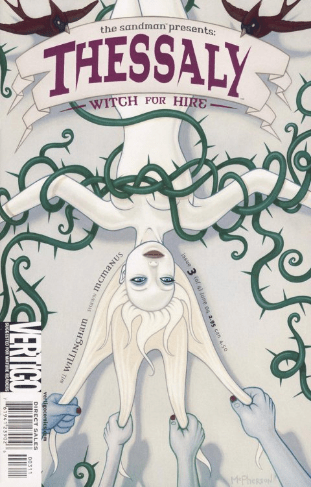
But Coronis cheated on him. A white raven that had been appointed by Apollo to watch over her, informed him of her infidelity. Apollo was so broken by the news, he turned ravens black “evermore”.

Petty avian revenge wasn’t enough for Apollo, however. He took further revenge by hunting down Coronis and shooting her with an arrow. (In another interpretation, he sent Artemis, his twin “brother”, to kill her.) Coronis was pregnant with his child at the time. Apollo didn’t want the child to die for her mother’s sins, so he performed the world’s first Caesarian section. That child, according to legend, was none other than Asclepius.
Chiron, the wisest of centaurs, raised Asclepius, and Apollo awarded Chiron by immortalizing him as the constellation Sagittarius.

One day, Asclepius was asked by Minos, the ruler of Crete, to heal his dying son, Glaucus. (Some legends say that Glaucus was suffering from a terrible wound on his toe.)
A snake slithered into the room as Asclepius was caring for the boy, and what happens from here varies. Some tellings say Asclepius was kind to the snake and it “licked his ears clean”, allowing him to “hear knowledge previously unknown to man”. Others say the snake licked the boy’s wound directly, and the boy recovered a few hours later. In another telling, Asclepius bashed the snake with a stick and killed it, but then a second snake slithered in and–feeling sorry for the first snake–placed a leaf upon it, reviving it. Asclepius then placed this miracle leaf upon the boy, and it revived him, or possibly even brought him back from the dead.
Asclepius married Epione, and they had two sons and five daughters together. Among the daughters were Hygieia, the goddess of cleanliness (where the word “hygiene” comes from), and Panacea, the goddess of remedy. Aristotle would later claim to be the 16th generation descendant of one of his sons, Machaon, which finally brings us back to Hippocrates.
Hippocrates claimed to be an 18th generation descendant of Asclepius’ other son, Podaleiros. As mentioned earlier, he was an Asclepian priest who recorded many of the causes and descriptions of diseases that are still used to this day, identifying natural causes that were previously blamed on superstition.
The legends went on to say Asclepius became so great at healing that Hades had to complain to Zeus about a lack of souls reaching his realm. After a compromise, Zeus struck Asclepius dead with lightning, but felt guilt, granting Asclepius the constellation Ophiochus, the “serpent holder” (Constellations are the consolation prize of the old world, it seems). Some say Asclepius was already a god when he got hit by the bolt and therefore didn’t actually die, but experienced an apotheosis instead.
The Hippocratic Oath is still given to many medical professionals, or at the very least is read at graduation ceremonies.
It is very long, but here are some snippets:
“I swear by Apollo the physician, and Asclepius, and Hygieia, and Panacea, and all the gods and goddesses as my witnesses, that, according to my ability and judgement, I will keep this Oath and this contract:”
It’s a very pagan ritual, clearly.
“…to look upon his offspring as equals to my own siblings, and to teach them this art, if they shall wish to learn it, without fee or contract…”
This is an interesting excerpt. Many people no longer teach their skills freely, let alone to their offspring, so this family style of knowledge sharing is, tragically, a dying tradition. For example, many of the baby boomer generation failed to pass on even basic maintenance knowledge to their young, let alone their knowledge of the family trade.
“I will neither give a deadly drug to anybody who asked for it, nor will I make a suggestion to this effect. Similarly I will not give a woman an abortive remedy.”
No Dr. Kavorkians. No abortions.
“I will remain free of sexual relations with both female and male persons…”
This is an interesting one, and more light will be shed upon the reason it is here as we learn more about the Rod of Caduceus, and Apollo’s half-brother, Hermes.
“Whatever I see or hear in the lives of my patients, whether in connection with my professional practice or not, which ought not to be spoken of outside, I will keep secret, as considering all such things to be private.”
This is basically ancient HIPAA, which is even pronounced like “Hippocratic”, isn’t it? This passage also speaks once again about the power of silence.
Of course, this oath, which many doctors have sworn to, is no longer taken seriously. You’ll find dozens of articles about why doctors shouldn’t feel guilty for breaking their Hippocratic Oath. Even Universities have gone on record saying the oath is merely “ceremonial and non-obligatory”. Which basically means it’s now worthless. Not that people can be trusted to keep their word these days, mind you. But an oath used to mean something, and the world has changed.
Of course there’s new modern versions of this oath which are far more non-committal, and completely unrecognizable compared to the original, such as this one, which starts:
“I solemnly pledge to consecrate my life to the service of humanity…”
The pagan elements are gone, which is good. I personally wouldn’t feel comfortable swearing an oath to Apollo.
“I will practice my profession with conscience and dignity…”
“The health of my patient will be my first consideration…”
“I will maintain the utmost respect for human life…”
These lines are wishy-washy at best and can be interpreted in many ways. Most modern Hippocratic Oaths tend to read this way.
“I will respect the secrets that are confided in me…”
This line is especially interesting because it discourages teaching and encourages keeping knowledge of the profession secret. It keeps the medical profession ablaze in the Torch of Enlightenment, not meant for the eyes of the general public. Keep in mind it’s not specific about whether or not it’s talking about the knowledge of the profession or keeping patient information secret, though the vagueness seems to indicate both, especially given the lack of a passage that encourages teaching anywhere in this version of the oath.
This modern take makes more sense when you consider the mythological interpretation where a serpent licked Asclepius’ ears clean, allowing him to hear the divine secrets of medicine whispered into his mortal ears. (If anything, this line would be far more suited to a HARPOcratic Oath, not the Hippocratic. More on Harpocrates later.)
Wishy-washy oaths and hard-to-believe mythologies aside, it’s quite clear to me that the Staff of Asclepius represents a valid representation of the medical field because it is built into the history of, and respects, the medical profession.
Next, we’ll see how the Rod of Caduceus compares.
 Nick Enlowe
2 thoughts on “Unraveling the Many Secrets of the Rod of Caduceus: The Staff of Asclepius”