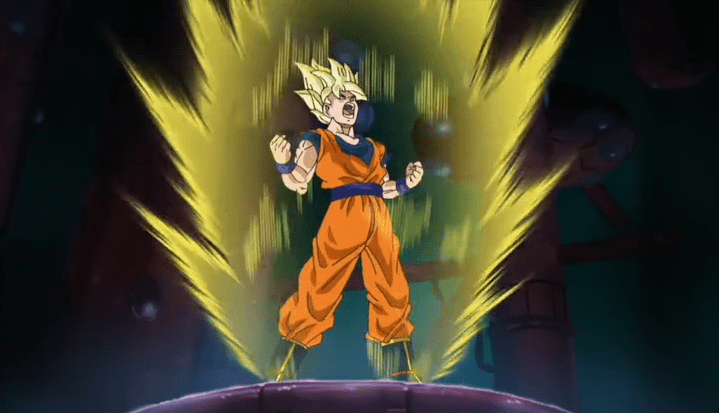
There’s an old saying that goes “Do not let spilleth the cup of Hermes.” Do you know what that means?
What if I were to ask you what chi (ki/qi) is?
Would you say it’s what martial artists use to increase their attack power, that supernatural well of energy Dragonball Z characters famously tap into?
Would you say it’s the energy created when you’re concentrating unusually hard on something?
Or maybe it’s a bit like “The Force” in Star Wars?
Would you say it’s “life force energy”?
Or perhaps you would say it’s “bio energy”, or “prana”, or “reiki”, or “orgone”? If so, you’re farther along than most.
It’s said that storing chi can help you become stronger and more alert, and that if you were to store enough, you could even objectively experience other worlds. Sounds almost like a mystical cup of coffee, doesn’t it? And coffee is certainly a boon when writing.
So what is life force energy? And where do the likes of Goku, Naruto, and Bruce Lee store this energy? Is there some mystical container in which one can store or “charge up” their chi?
If you ask the Tsaoists where chi is stored, they will admit it’s stored in the “abdominal area”. But why there? How does one store energy in their abdomen?
The Egyptians believed in chi. In fact, they believed mastering chi was the secret to immortality, which brings us right back to the Egyptian goddess Isis, the “goddess with 1,000 names”, Columbia being one of those names.
Many believe that chi is the “feminine energy of the goddess”, and, even though it’s specifically been designated as feminine, both sexes have access to it. The Egyptians were the first known culture to study the magnetics of bio energy, and they believed they could amplify their “bio-magnetic field”, or their “aura”. Pythagoras continued to teach these Egyptian beliefs in ancient Greece, and the Chinese discovered it independently following the discovery of the magnetic compass.
However, this information was quickly quieted and taught only to emperors, high priests, nobility, and the like. This is where you get historic figures like John Dee being a tutor and “instructor of magick” to Queen Elizabeth I. Dee was a royal alchemist, and is often featured in stories that are layered with Hermetic Qabalah teachings. For example, in Neil Gaiman’s Sandman, he is represented as “Dr. Dee”.
But to fully understand what the cup of Hermes actually is, what it has to do with chi, and why it shouldn’t be spilled, we’ll need to take a look at several other concepts, one of which is prominently displayed on the Rod of Caduceus itself: The twin snakes.
 Nick Enlowe
2 thoughts on “Unraveling the Many Secrets of the Rod of Caduceus: Can A Writer Go Super Saiyan?”