Welcome to the nootropics rabbit-hole. As you know, I love me some rabbit-holes, and this subject is no exception.
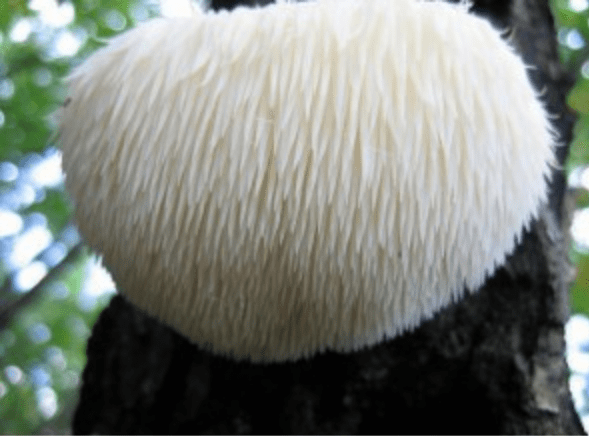
Native to North America, Europe, and Souteast Asia, Lion’s Mane is a mushroom. It’s a nootropic. And actually, I hear it tastes a lot like lobster, so much so that some people fry it up with butter and eat it. The Chinese call it Monkey’s Head and have been using it for food and medicine for the past 2,000 years, and the Japanese have tied this ‘shroom to their mystical yamabushi lore. In fact, they call it Yamabushitake. Kind of a portmanteau that means “mushroom hidden in the mountains”.
What IS a nootropic?
Any drug or substance that increases (or at least is purported to increase) cognitive ability is called a nootropic.
You really have to be careful with this subject, though. There’s this whole movement online that call themselves “mind hackers”, and they sometimes refer to nootropics as “smart drugs”. Yeah, it’s been trendy.
As a result, there’s a lot of hearsay, dispensing of false information, and there’s even bad actors being paid to hold particular opinions or sling a particular brand, so you have to proceed as objectively as possible if you wish to venture down this hole.
The two most popular nootropics are caffeine and nicotine. It’s hard to deny that both of these substances have strong effects on people’s daily lives. They’re also both … addictive.
Caffeine is so chemically-similar to adenosine that it binds to our A1 receptors in place of the real stuff, thereby preventing feelings of sleepiness when our body’s trying to tell us it’s time to rest. It’s also a stimulant, providing energy and motivation.
Nicotine stimulates the adrenal gland, producing epinephrine. Epinephrine, of course, increases heart rate and blood pressure, but it also stimulates the production of dopamine in our brains …for about two hours.
I’m not about to take up chewing nicotine gum even though the increased dopamine effect is kinda-sorta…well… exactly what I’m looking for, along with the boost in motivation that caffeine can offer. Hm. But … what I mean to say is, it is an interesting coincidence that the two most popular nootropics just happen to almost perfectly address the theories mentioned in my previous post.)
There are many other nootropics that have a wide range of benefits. And, fortunately, most of them don’t seem to be as addictive as the two most popular options and have rare, if any, side-effects.
LION’S MANE EXTRACT
There are a lot of claims about what Lion’s Mane can do, but what immediately caught my attention was the fact that it targets the prefrontal cortex (PFC), the same area of the brain that ADHD people have problems with.
The hericenones and erinacines within Lion’s Mane are kind of awesome. Especially the erinacines, which stimulate enzymes in the hippocampus, increasing the Nerve Growth Factor (NGF), which increases neuroplasticity. It also stimulates neurogenesis by boosting neurotransmitters. This has the effect of growing new neurites in your brain, while also repairing dendrites, axons, and synapses if they happen to be damaged or deficient.
This purportedly means it can help sharpen your memory, remove feelings of “brain fog”, boost productivity, improve your mood and outlook on life, and it also has the added effects of being anti-inflammatory while improving your immune system, and can even improve your sense of smell. Students like to take this stuff before study sessions and big tests. Some folks even take it as a stress-reducer or take it to “see projects with more depth and clarity”.
There are doctors who have recommended Lion’s Mane to treat neurodegenerative diseases such as Alzheimer’s and Parkinson’s. People who are into vivid dreaming also take this stuff, but I’ll get more into that, later.
The double-blind studies on this are also interesting. There’s about a dozen of them, including proof that Lion’s Mane does, in fact, increase NGF, that nerve damage can get “profoundly” repaired, and there were a few panels with depressed, menopausal female participants who had a much brighter outlook on life by the end of the study (providing they were lucky enough to not be in the control group). But, sadly, I didn’t see any studies regarding ADHD.
There’s probably a reason for that. Lion’s Mane is classified as a CAM (Complementary and Alternative Medicine), so its distribution is unregulated. Big pharma can’t make money off of you by selling it. It’s a cheap and abundant competitor to the likes of Adderal and Ritalin, so the likelihood that researchers would receive funding for such an experiment is low. Health students and health professionals alike receive “limited information” on CAMs for these reasons as well.
JUST WHAT I DIDN’T NEED…
Most of the side-effects from use of Lion’s Mane are rare, but they do include unusually vivid dreams if you take it too close to bedtime … perhaps because of the neural activity going on in the frontal lobe during sleep. This nootropic is classified as non-toxic, and in all lab tests performed to-date, no adverse effects were observed.
However, some people using this stuff have reported side-effects, including feelings of demotivation. That’s pretty much the opposite of what I’m after. Almost a deal-breaker.
I already have a positive outlook on life and am quite happy and fulfilled. I do experience “brain fog” some days, but most of the time I’m firing on all cylinders. I’d only be taking this stuff for the NGF and focus boosts.
I’m still interested in trying Lion’s Mane as an experiment. I ordered a 60-day supply and decided to supplement it with other options to counteract the possible side-effects, especially demotivation. Unfortunately, I screwed up and ordered the wrong supplement, so now I have nothing to counteract the potential demotivation that may occur which would kind of ruin this experiment. Let’s just hope I don’t experience that particular side-effect.
 Nick Enlowe
2 thoughts on “An Experiment”