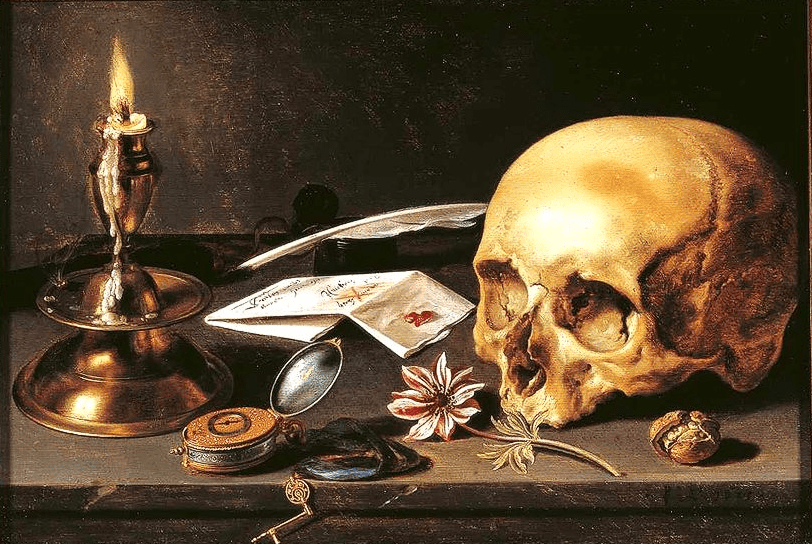
Life is fleeting. By the time most people realize they’ve taken their time on Earth for granted, it’s too late.
Something unexpected could happen to end your life right now. You won’t have time to hide your secrets, settle your accounts, forgive those you never forgave, make that last confession, or write that damn book.
Memento mori. “You are mortal”. Without this constant reminder, a society can wind up with rampant hubris and pride.
About a week ago, I found out my dad has cancer. The truth is, he may not be around much longer. I’ve been trying to process this news, and I’m just now beginning to come to terms with it.
There are few memento moris more powerful than this. I’m glad I completed a novella and that he got to read and enjoy it, but now I fear I may not complete my first novel in time. That’s okay. I want to spend time with him before he’s gone, and I think he knows I have a few more great stories within me that will come out before I follow him into the grave.
I don’t think of this as final. I’m certain we will meet again.
Not all parents realize it, but they tuck their children into bed precisely because of the age-old tradition of memento mori; There’s no guarantee anyone will wake the next day, so it serves as a way to remind children that there’s no real reason to rush through childhood. Every day is a blessing, but each day is also one step closer to the grave. Tucking children in is supposed to teach them they should take their time and enjoy life while it lasts, especially those innocent childhood years.
After all, children grow up fast. If you’ve had children of your own, I’m sure empty nesters have advised you of how precious those childhood years are, and to enjoy every minute of it while it lasts.
In the Victorian era, most children didn’t live past six years old. This was due to lots of factors such as disease, hygiene, and even the way glass baby bottles were designed when they were first invented in the 1800s (Sadly, they trapped a lot of bacteria). A child turning seven was a major cause for celebration because it meant they were likely to live into at least their early twenties.
Renaissance paintings often had a memento mori or two, such as rotting fruit, dying flowers, a skull, an hourlgass, or perhaps even the grim reaper himself.
Mexicans still have their Dia los Muertos. Pirates used the skull and bones not to scare their enemies, but as a memento mori. Rosicrucians use it for a similar purpose.
Such a memento doesn’t need to be so morbid these days. Sometimes, all you have to do is unplug. For example, gardening can take an unproductive day that seems to be flying by and make it into something slower-paced and infinitely more rewarding. My personal favorite is to spend time with my wife, reading a (physical) book together with her on the porch before the sun sets.
A Roman soldier’s greatest honor was to lead a parade through Rome in a procession called the Roman Triumph (vir triumphus). It was (and still is) a religious celebration to not only to honor a victory, but to make a sacrifice to Jupiter, the God of War.
Back then, a servant was hired to stand behind the honored soldier to periodically whisper, “Memento mori”. Even on their greatest day, these soldiers wanted a reminder to keep them grounded, down to Earth, focused. They didn’t want to be distracted by the bread and circuses. They didn’t want to look around one day and wonder where all their time went, which is precisely what the modern world of digital screens do to us today.
In those times, life expectancy was short. You didn’t have much time to succeed in much of anything, and if you did, you would probably die shortly thereafter. It gave people perspective. Death was the great equalizer, and even emperors knew their time would come. I know of a hundred modern day senators who could use a memento mori whisperer.
Now, the average US citizen has roughly 67 to 80 years to waste, and we can spend it all in a hammock if we so choose. The urgency to remind ourselves of our own fleeting time has diminished. We have the opposite of memento mori now. Pop music constantly drills into our heads this idea that we’re invincible. Entertainment is serialized as content to be consumed like it’s an addiction.
We live such insulated lives that we fear getting hurt, fear heights, fear getting stung by a bee, but then we turn around and throw our lives away by pretending we aren’t going to die, and choose to spend it on stupid, frivolous pastimes that give us no fruits in exchange for our labor, at the expense of time we could’ve spent with people we love.
I think that’s why so many cultists focus on selfish pursuits and immortality. They see it as something curable, something to conquer. And if they achieve their magnum opus, can continue to “do as they wish” forever.
The less aware we are of our own mortality and the more distracted we are by frivolous things, the less demand there is for religions to help us answer that age-old question: “What happens after we die?”. Without memento mori, we’re far less likely to appreciate life and the precious time we’re all given on this Earth.
So if you haven’t done so in awhile, unplug. Create. Spend time with your family.
 Nick Enlowe
4 thoughts on “A Memento Mori”