Problems with farming this year are seen in the grocery stores next year.
Let me restate that: The effect of all the issues farmers are experiencing right now will not be fully seen in grocery stores until next year.
2021 saw low crop yields across Canada and the U.S.; Hay got scarce and more expensive. As a result, there was a massive downsizing of livestock across North America. For the most part, hay was sold locally but didn’t see the larger market. Farmers bought just enough to keep a few breeders so they could try again in the Spring.
It takes 18 months to raise a steer and 8 months to raise a pig. Unless you’re a superfarm with a sweetheart deal, it costs more to raise animals right now than what they’re worth on the open market.
If a farmer somehow does find a way to raise animals for profit, truckers still have to ship it … but diesel is costing thousands per fill-up.
Egg production costs have also skyrocketed this year. Bulk chicken feed used to be about $180. Now it’s around $430. And the price continues to rise. There are seed shortages, fertilizer shortages, and fuel prices affect tractor efficiency. It’s easy to see why most farmers have downsized the number of animals they keep and are planting less crops.
The food on store shelves is the result of last year’s crops, so you really can’t see the effects, yet. But I’m willing to wager there will be a whole lot less on the shelf later this year, if not early next. There’s simply not enough supply to meet next year’s demand, and importing is also looking like a no-go.
Let’s face it: The economy looks bad pretty much everywhere. In the U.S., household wealth is getting destroyed, personal debt is climbing to new record highs, and consumer sentiment is where it was in the mid-seventies. I don’t know about you, but I’m traveling less, being more prudent about what I buy, and my ROTH IRA and personal stock portfolio have gone into phalanx formation.
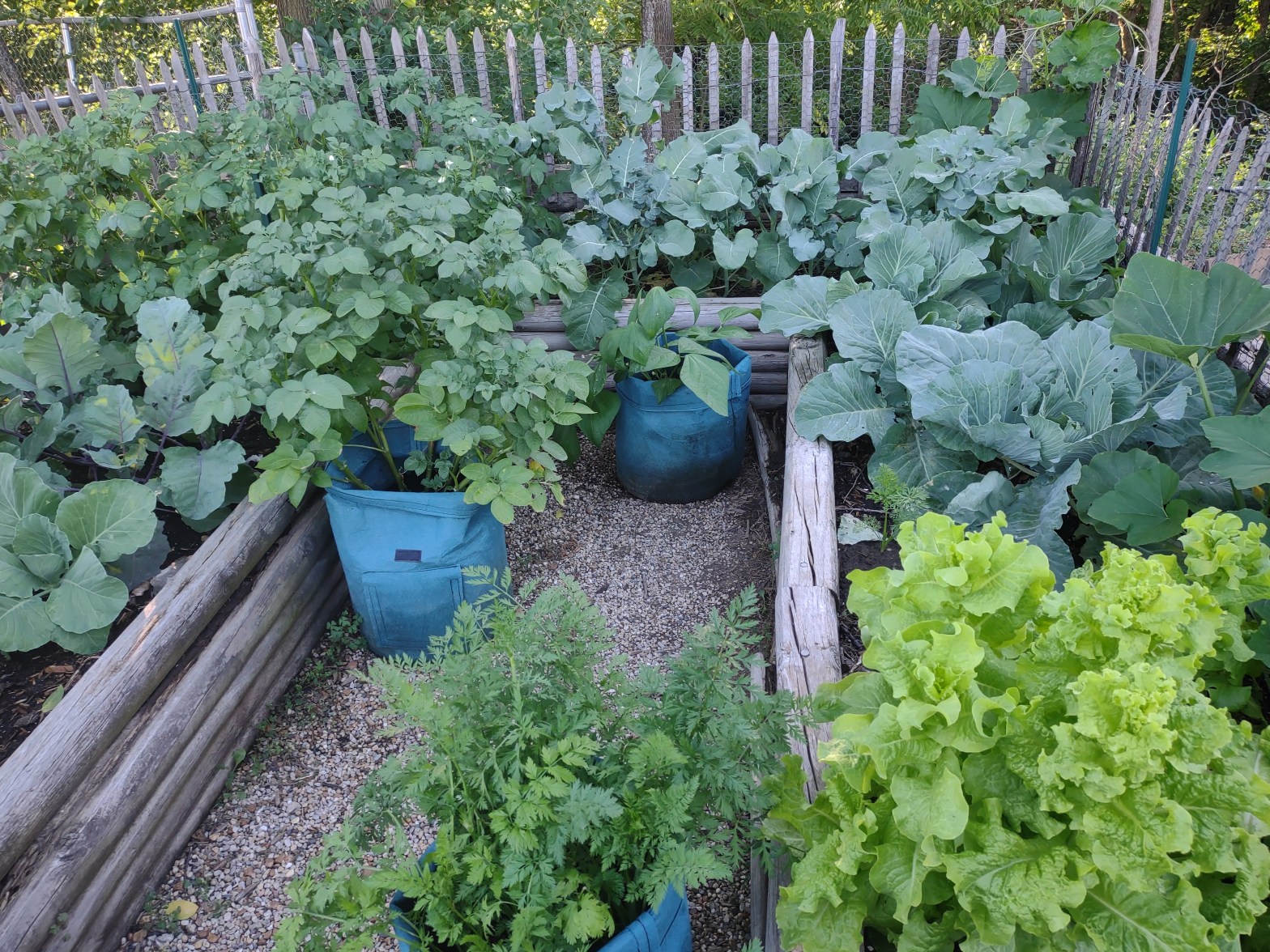
What’s pictured above is a section of our garden (taken about a week ago), and we’re so thankful to have it. If the country goes into a recession–which I think it already has–an accomplishment like a bountiful garden creates the feeling that we’re going to be okay.
We’ve learned how to create our own fertilizer. We know how to save our own seeds. We know how to propagate corn, understand the survival value of root crops, and we have learned the value and ease of growing so-called “invasive species”, like purslane. We’ve learned as much as we could about gardening, foraging, and even animal raising, but there’s so much more to know.
I want to encourage anyone reading this to consider growing something other than decorative flowers and grass in your yard. Just the simple act of planting a few potatoes can go a long way toward being independent of the frail system that surrounds us. My guess is that the national economy will get bad. Real bad. But that doesn’t mean we have to depend on it. We can create smaller, local economies that don’t depend on the health of the larger economy in order to get by.
No empire lasts forever, but it’s our duty to do what we can to ensure our families survive. (And I’ll need that extra time if I ever plan on finishing my novel.)
 Nick Enlowe
One thought on “Learn 2 Garden”