
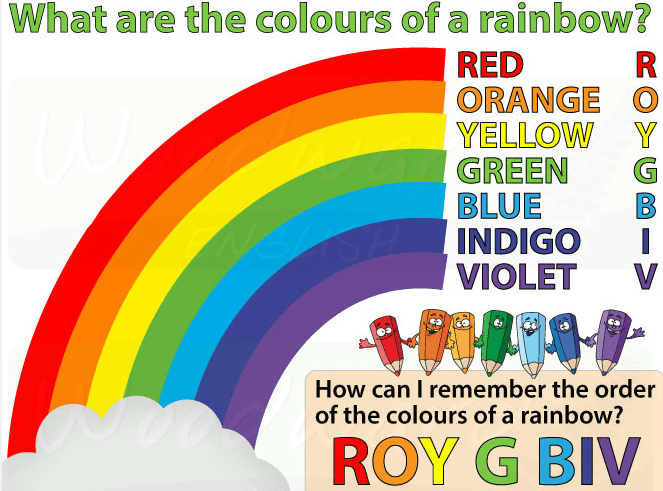
How many colors are in the rainbow?
The answer, of course, is seven. We’re all taught this as small children.
But let me show you a few pictures in Philly, PA. First, we have the Philadelphia Museum of Art, whose 72 steps (thanks to the wonderful 1976 movie Rocky) have become famous as a metaphor for underdogs who punch above their weight and manage to conquer a challenge, against all odds.
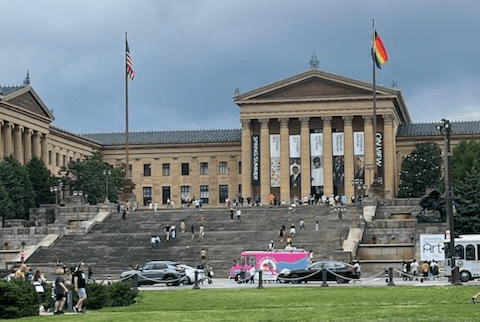
But this month in 2023, the museum decided to be “loud and proud” so that everyone who manages to conquer those steps and take a snapshot of their victory will be (without careful cropping, anyway) “supporting the cause”.
At the very least, they’ll be subconsciously doing so by associating that positive moment with the surrounding scenery, symbolism and all.
Thought cloud: Well, maybe that flag is kind of hard to see. It’s just an innocent rainbow, right? And it’s way up high, so what’s the harm? Although it does seem to have six colors instead of seven. (Maybe it’s just a fluke.)
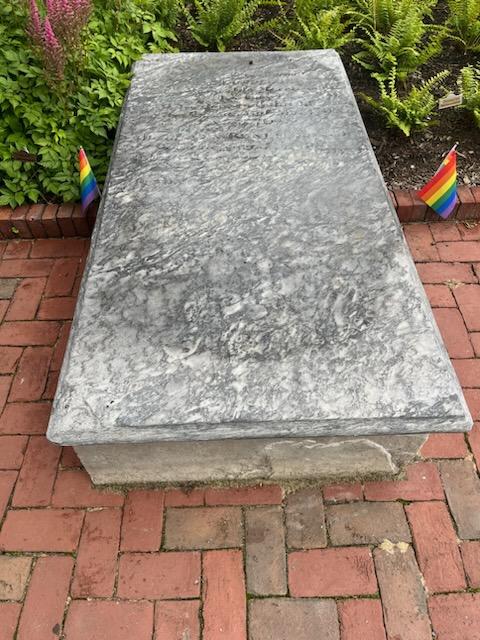
Anyway, our next stop is Benjamin Franklin’s grave over at the historic Christ Church, the very same church he attended.
Thought cloud: Hm. There it is again. Two rainbows this time, and no American flag in sight. Strange, especially considering this is a Founding Father who helped draft and sign the Declaration of Independence. And again, the rainbows have six colors instead of seven. Another fluke, perhaps? I mean, indigo and violet are kind of similar, so maybe it was just a mistake, a printing error.
Ahem. Back to our childhoods. As we grew, we learned even more about this rainbow phenomenon, the science behind it. We excitedly pointed out rainbows to grown-ups after the rain, and even noticed them with joy on hot summer days while playing in the water sprinkler.
Most of us were taught the mnemonic device: “ROY G. BIV”. Seven distinct letters for seven distinct colors. We were drilled, tested, and graded by this fact, and probably had it memorized by rote upon arrival in third grade.
By sixth or seventh grade, we were taught that when we see the color white, we’re actually seeing a reflection of all the colors. That is, every single color in the visible spectrum, all at once. (It’s quite wondrous when you think about it.) Whereas if we see the color black, we’re actually seeing an absence of light (low-to-no reflected light).
One can even use a prism to disperse white light into the seven distinct constituent colors, neatly separating the wavelengths into the seven beautiful colors of the rainbow we all know and love, just as stated in Snell’s Law.
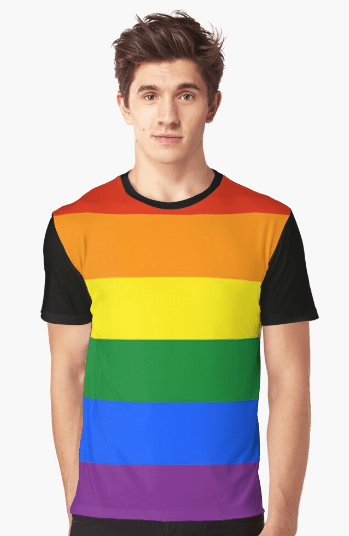
And yet pop cultist let fly a six color rainbow while talking about inclusion. Why?
Of course, no amount of mass-producing six-colored flags, printing six-color clothes, and subtracting a color everywhere else they can in pop culture media can alter Snell’s Law. But this is exactly the kind of immutable truth PostModernists try to refute, despite reality itself arguing against them.
Similarly in the art world, you learn how different colors of paint can work together to create something beautiful. In fact, if even one of these primary or secondary colors didn’t exist, you’d lose the ability to mix a massive number of colors, shades, or tints. An entire section of the Color Wheel would be knocked out of commission for good. While you could still perhaps create something beautiful with one less color, you’d be more limited in scope artistically, for all eternity.
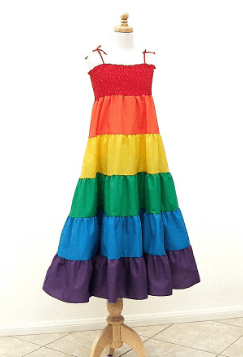
Perhaps it is true that all colors are needed and can come together to create something beautiful. Perhaps that’s the lesson.
This idea is nothing new, of course. It’s certainly not some fad that suddenly became popular now that it’s Current Year (like some would have you believe). It’s even a clear theme in The Bible. For example, Romans 15:7 says: “Welcome one another, then, just as Christ welcomed you, in order to bring praise to God.”
Note it doesn’t ask us to accept or even tolerate sins. In fact, we’re called to love the sinner and hate the sin. But all are welcome. This has always been true, a sentiment that is even sung about today in Christian hymns that were written hundreds of years ago.
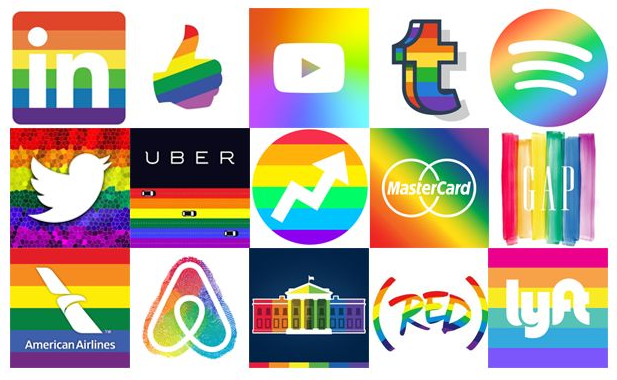
Christians, of course, want sinners from all walks of life to come into the house of God and ask forgiveness.
Repentance, forgiveness of the past, and peace. These are all hallmark staples of Christianity.
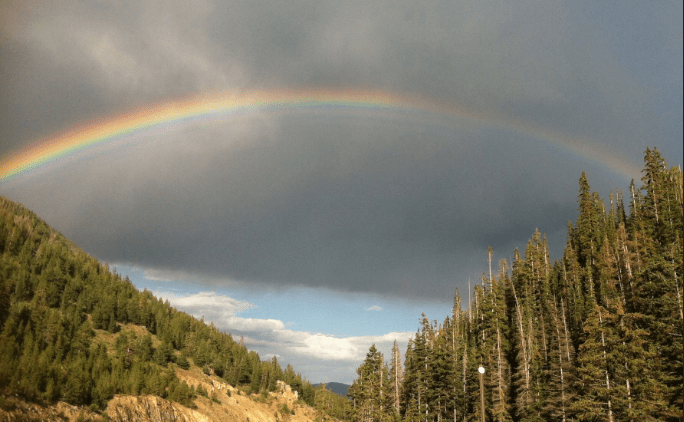
God Himself gave us, ALL of us, the seven-colored rainbow as a gift following the Great Flood. It was and is a symbol of hope, and it has always been a symbol of God. A symbol for all humanity. One might even say it would be the perfect symbol to represent unity.
So let’s put it this way: Why is it that, when the Pride flag got to be greater than 6 colors, the art designers didn’t do what should’ve come natural and add a seventh? They even went out of their way to start filling up an entirely different part of the flag, and it seems like they’d do anything to not add that seventh line.
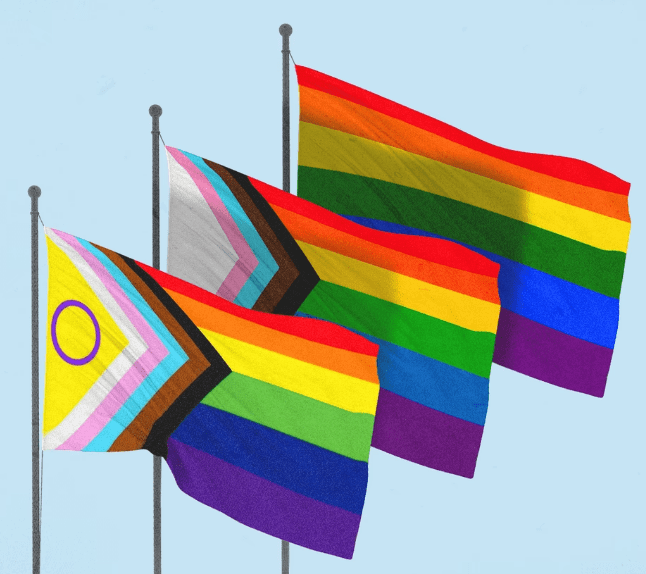
Well, it’s precisely because the true rainbow is a symbol of God. Pop cultists find symbols of God repulsive. They have a new altar to kneel at, so they need new iconography to represent their New Religion.
But six colors, leaving out one. Think about the connotation. Think about what that might mean. “Inclusive for everyone…except for them,” perhaps. A lot can be said in subtext. There are no accidents in a carefully-designed flag, in a professionally-made book, or in a big budget computer-animated film. Everything is placed into a scene for a reason. Everything is designed a specific way for a reason.
I’ve spoken in this blog about whether or not the people calling the shots behind the scenes know about this deeper, hidden meaning. I’m talking about the funders, the producers, the Big Three book publishers, the authors who regularly show up in the New York Times bestseller list and their editors, the politicians who get softball interviews, the art directors at Hallmark designing and overseeing greeting cards, the creative directors behind Spider-Man: The Video-Game. They all know about the occult. They do. They sold their souls to get where they are which makes them painfully aware of God the closer they draw to the grave. They believe in this stuff so much, they always let it guide their works, even if subconsciously.
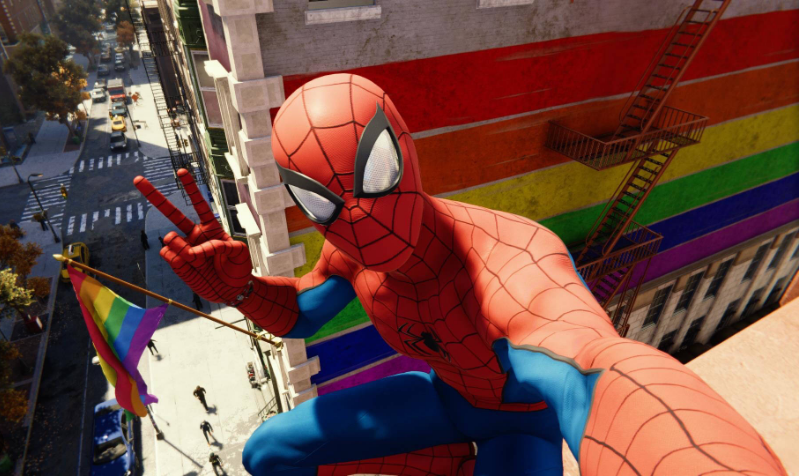
Now, you’ll still find the occasional normie rube (who doesn’t understand the first thing about symbolism) carrying around a 7-color flag at a 6-color rally. But it’s quite rare, and it’s rare for a reason.
So, during the remaining days of June, just keep in mind you should be wary when you see a six-colored flag. It is not a sign of God.
And take solace in knowing that our symbol of hope, the true rainbow, was not taken from us and re-appropriated, and it never will be. We will always have our calm after the storm, humanity’s symbol of hope.
 Nick Enlowe
6 thoughts on “The Good News Is… the Rainbow Was Never Stolen In the First Place”