So it turned out I’ve been a discovery writer all along, which explains a lot about who I am as an author and where I stand today (a revelation I learned while watching one of Brandon Sanderson’s lectures on YouTube).
- There are discovery writers, and on the opposite end are outliners.
- There are pantsers, and on the opposite end are plotters.
Discovery writers and pantsers are basically the same thing. Ditto for outliners and plotters. Pantsers write without plans. Plotters plan first, then write.
But there’s a lot more nuance to it, things I wish someone would have told me years ago.
I always fancied myself as an outliner who used discovery writing to force myself through each scene. I do a loose outline that’s malleable enough that it can be changed as I go, but I always have a concrete beginning and ending in mind. Nailing that ending is always my goal, that’s what I’m shooting for.
Nearly everyone is a “PLANtser”, just like me. That is, they land somewhere on the spectrum between plotter and pantser. Even if there’s pansters who write without any outline at all, chances are they at least have a concept and rough outline in their heads, or have a scene or two in mind to aim toward.
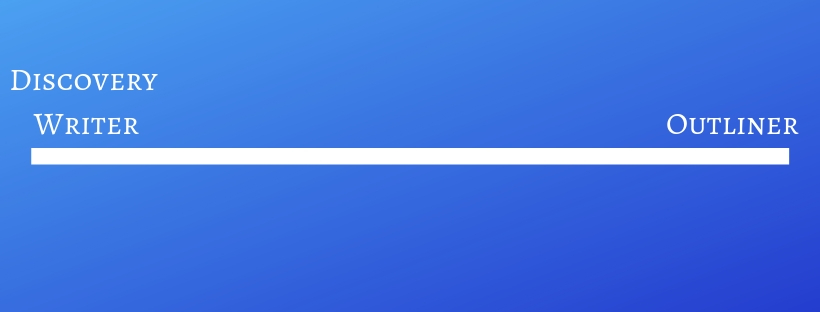
A writer can outline the world-building and setting, but discovery write the characters, plot, etc. But to know who you are as a writer, it’s a good idea to figure out which side you lean closer to on the Discovery Writer/Outliner spectrum.
Where you land can reveal a lot about how your mind works and how you can be more successful at completing large projects.
The Discovery Writers’ Half
Discovery writers tend to be more right-brained and work best when there’s less structure. If they’re asked to create an outline for their story from beginning to end, when they’re done creating that outline, they feel like they’ve already written the whole story and get bored, wanting to move on rather than trying to write it long-form.
George R R Martin is a discovery writer, but prefers to call himself a “gardener”. (You may also hear the term “intuitive writer”.) What discovery writers/gardeners/intuitive writers do is “grow” their stories organically by adding and trying different things in order to see what works best. Kitchen sink/see what sticks approach.
It takes a lot of hard work, and there are some days in which the story simply won’t grow. It’ll feel a lot like laying groundwork, or re-laying groundwork. Discovery writers don’t do well with wordcount challenges because they’re often destroying and rebuilding what they’ve already written, editing as they go.
Did you write today?
Yes.
Great! But did you get anything done?
Yes!
Okay, but did you add any words to your manuscript? Did you actually get farther in the story than before?
…No.
I am most definitely a discovery writer. I destroy and rebuild old scenes all the time with new information I’ve learned, and there are many days where I’ve spent an entire day writing, yet didn’t technically add anything to the actual wordcount. They also call this problem being “unable to shut off your inner narrator”.
The Outliners’ Half
And then there are outliners. George R R Martin calls these people “architects”, even though he’s not one himself.
Outliners tend to be more left-brained in their approach, mapping out everything and following it like a set of instructions. They tend to be prolific and nail their endings.
If you sit outliners in front of a blank page and don’t let them plan anything at all, they often leave the page blank because without planning, they don’t know where the story’s going, let alone how to start. Once they have a target in mind, the steps to get there formulate and they’re able to begin.
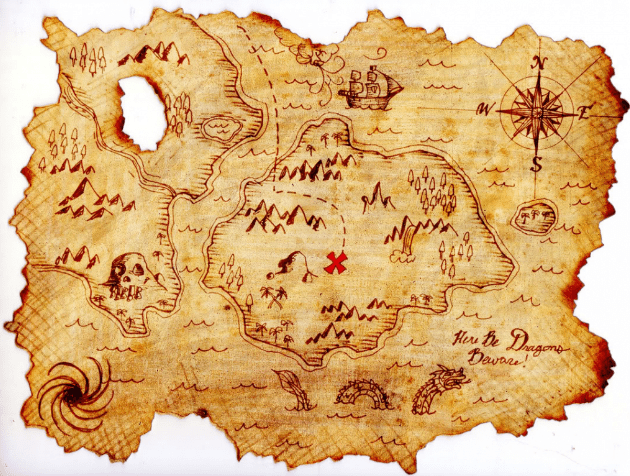
In other words, they prefer to work with a map to find their buried treasure, whereas discovery writers just start digging everywhere, building a network of random tunnels until they strike gold.
Gosh, guess which method is more efficient?
Even though I’m more of a discovery writer, I share the outliner’s blank page problem, too. But it’s even worse: I have to force myself forward when facing down a blank page despite having an outline. I even have serious trouble figuring out what I want to say when signing a greeting card. This kind of hang-up can suck the fun right out of writing.
Orson Scott-Card is a famous outliner who outlines so heavily, he’ll work on his outline alone for six straight months, but then write his novel in two weeks because his outlining was so thorough, extensive, and heavily written out. (And I think most would agree Card can stick those endings.)
Foibles & Revelations
Some outliners take their planning too far and get what’s called Worldbuilder’s Disease, where they might spend 20 years building their world yet never get around to actually writing their book. Thankfully, I don’t have that problem.
Discovery writers have to face unique challenges, too. They tend to revise a lot, wanting to get it “just right” before they can move on. So they get their chapter 1 perfect before they feel comfortable starting chapter 2. And as they “garden” their chapter 2, they might discover something that makes them have to go back to chapter 1 and revise/rewrite again. But then during chapter 3, they get a better feel for where this book is going, so they have to rewrite chapters 1 and 2 yet again.
Sounds hauntingly familiar.
And it perfectly explains why I’m such a slow writer. If I don’t force myself to turn off my inner editor, I prefer to rewrite the entire story again from the beginning each time my “living outline” changes, or just to ensure everything has been completed to a high, presentable standard (during the stage where I should be writing a rough draft).
What it comes down to is discovery writers outline as they write, sometimes even if they already have an outline. But outlines tend to stifle discovery writers. Being a discovery writer with an outline is not a good idea. It’s like an equation that cancels itself out.
The best way for a discovery writer to complete large projects is by turning off that inner editor and forcing himself to keep moving forward, trusting that the revision will be a dramatic transformation (which it will). Otherwise they could end up stuck on the same book for a decade (like me).
Interestingly, Brandon Sanderson is an outliner, but he’s tried discovery writing several times in the past. He can do novella-sized books this way or middle grade books, but if he tries to write a book over 50k words in length, the discovery writing method doesn’t work for him. He even stated when he tries to discovery write a high fantasy novel, it’s always a “disaster”.
If even Sanderson, who has completed many high fantasy novels, can’t get a high fantasy novel done discovery writing, then how the heck is a first-time author supposed to pull it off???
Trying to discovery write a high fantasy novel is asking for it, so of course that’s exactly what I did, right out of the gate. I shot myself in the foot and took myself out of the race. It even explains why I’ve been able to complete short stories and novellas, but why novels still elude me.
It’s clear discovery writing is far better suited for small-scale projects than large-scale ones.
To be honest, I’m not sure why no one suggested this possibility to me the many times I went seeking help to break my Writer’s Block. But at least I better understand who I am as a writer now, and why I’ve suffered Writer’s Block so many times in the past. Understanding the problem is the best way to start figuring out the solution. At least now, I have a map.
 Nick Enlowe
2 thoughts on “I Discovered I’m a Discovery Writer–Now What?”