
All of the points have already been made. Over and over again. But Hollywood didn’t listen. And they won’t.
2012 was the last year I remember truly enjoying the moviegoer experience. Don’t get me wrong, there were certainly a lot of bad movies, but there were still enough good flicks that it made taking a chance worthwhile, such as Joseph Gordon-Levitt’s Looper and the surprisingly heartfelt Wreck-It Ralph.
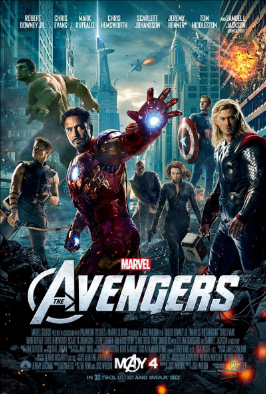
2013 was the first year of my life where it felt like there was almost nothing at the theater for me. It felt like Gen Y was getting left behind for a decidedly Millennial marketing campaign. I was already disillusioned by the MCU at this point (I know most didn’t get sick of it until post-Endgame), and the “good” movies that year felt like copes, at best.
Despite the notable decrease in writing quality, I could see that people were often pretending like these new B-tier movies were still just as good as the A-tier movies that had come before. Since I’d unplugged, I could see the phenomenon unfolding more clearly than most. It was a strange spectacle to witness, and it only got worse from here.
Then those odd movies kept popping up. Stuff like The Purge and 12 Years a Slave. Movies that seemed to want to poke the hornets’ nest, encourage rioting and race crimes for issues that seemed like they’d already been long-settled.
Well, maybe 2013 was a bit of a misstep year.
Then came 2014. Still felt like a drought, but I at least liked X-Men: Days of Future Past, Big Hero 6, and The Lego Movie.
But it had many movies that were obvious deconstructions or felt like a waste of time. They were “content”. “Filler”. That’s in addition to the policy trailers and movie previews, which were getting absurdly overlong, trying my patience with their insipid messaging, sometimes running well over half an hour after the movie was scheduled to begin. They were full of cell phone and insurance and car commercial ads, and terrible, filthy movie previews that weren’t even fun to riff on.
Sitting there started feeling like a humiliation ritual, so I started coming to movies “fashionably late”, if I came at all.
2015, of course, was the year of Star Wars Episode VII, The Good Dinosaur, and Fifty Shades of Grey.
Alibaba had been funding American movies more and more by this point, along with companies like the China Movie Channel, which not only introduced Chinese censorship laws to scripts, but gave cause to dumb down storylines to appeal to a broader, worldwide audience.
Bad Robot had already been doing irreparable damage to movie franchises while running its scam over the toy industry. If you weren’t a fan of the MCU or John Wick at this point, there was almost nothing waiting for you at the theater…except a bad time.
I would’ve thought Hollywood had run out of ideas if it weren’t for movies like Hateful Eight, Inside Out, and The Witch. Creatives like Quentin Tarantino and Robert Eggers won’t give up weaving complex tales so easily, but Pixar sadly is no longer the creative juggernaut it once was. It can no longer follow its own writing rules, let alone be depended upon to entertain your children without indoctrinating them like a sick, twisted babysitter. They went full tilt back in 2018 with garbage like Purl and Ralph Breaks the Internet, and they’ve only gotten worse since.
But 2015 was the first year many took to the internet to complain. Most Star Wars fans did not take kindly to Episode VII and made their voices heard.
Thus, the “Fandom Menace” was born, bringing about social media influencers like Yellow Flash and the Critical Drinker who spoke out about how too many main characters were turning into Mary Sues, wooden block paragons of perfection with no discernable character arcs.
They spoke about lazy writing, plot holes, race-baiting, the feminist agenda. They not only exposed what Hollywood had been getting wrong, but they provided a roadmap on how to set things right.
Hollywood’s response? 2016, which was almost a complete miss for me, with movies like the legendarily bad Melissa McCarthy Ghostbusters (2016) reboot. But MCU-heads were still supporting the movie industry gleefully, too busy making Deadpool memes to notice just how terrible a wasteland the rest of the movie-going experience had become.
Social media influencers went viral that year, however, chanting “Get Woke, Go Broke”.
But You-Know-Who became president, which explains where a lot of the vitriol in these films come from. These subversive, reductionist, pieces of garbage with lowest-common-denominator humor were meant to punish the masses for voting wrong.

A funny thing happened: The paypigs kept coming to the trough. The audience couldn’t help but lap up all the garbage in record numbers. Kept coming back for each miserable experience, like creatures of comfort voluntarily subjecting themselves to a cruel Machiavellian experiment investigating the effects of Stockholm syndrome.
But you can’t blame them – They have to “hatewatch” this stuff to get the word out, after all. Let their fans know what they should and shouldn’t watch, right? They have a responsibility to go see these movies.
…There’s something horribly flawed in that logic…
Logic that led the very same social media influencers who had helped spearhead the “Fandom Menace” into being manipulated by the very propaganda they sought to expose. The “boiling frog” effect got them, even if they still aren’t aware of it to this day.
I’ve said it before and I’ll say it again: No one–and I mean NO ONE–is immune to propaganda if they keep subjecting themselves to it. Even if just ironically, even if just to “hatewatch” or just for the “lulz”. And the scariest thing about propaganda is you won’t know if you’ve been manipulated.
So 2017 came along, and Hollywood doubled-down again. We got Star Wars Episode VIII, more terrible DCU films (aside from Wonder Woman), more terrible Spider-Man films, more terrible MCU films, more terrible Pirates of the Caribbean sequels no one asked for.
The die-hard holdouts that had any hopes left for Star Wars as a franchise got their dreams shattered completely, and the “Fandom Menace” grew. Exponentially.
And with each additional spectacular failure across all these IPs, the “menace” kept growing. Surely it was just a matter of time before Hollywood caved to fan demands, right?
So 2017 meandered on, and I’d already been boycotting movies for years. You couldn’t have dragged me to see Star Wars VIII, let alone anything else. I was thoroughly jaded. I wanted Hollywood to be starved of money. To be irrelevant. I wanted them to actually have to try and win back audiences’ hearts. Since they’d lost our trust, they’d have to earn it back. Or so I thought.
No matter how much boycotting and indifference I had, it didn’t do any good because so many people kept “hatewatching” and providing free viral marketing campaigns. Terrible movies kept breaking new records despite pissing off its audience.
By treating fans like garbage, the Hollywood machine has created a new, loyal secondary market. They’d been using outrage marketing and it proved profitable. Genius, really.
Book writers can’t do the same, and I’ll explain why in a moment.
Then in 2019, fans made their voices louder and clearer than ever, giving passionate criticisms to the final season of Game of Thrones which was so bad, so distasteful, so subversive, so poorly written, that it made all prior seasons and the entire IP unstomachable for most. It was a sudden 180 degree heel-turn after building 7 years of loyalty, which is why the reaction was so radical.
It was also one of the most brilliant and effective and viral examples of marketing I’d ever seen.
By then, all of the points had been made. The “Fandom Menace” had gotten its message across. It was up to Hollywood to listen.
And you know how it’s gone from there. It’s 2023 now, and Hollywood has done nothing but double-down each year since. Actors like Alec Baldwin, Ellen Page, Robert DeNiro, and Ron Perlman cuss and lash out at their fans, treating them as if they are subhuman filth.
And most movies these days are designed specifically to demoralize us as a society. If they’re not just outiright racebait like BlacKkKlansman, they’re sequels-of-sequels no one asked for, like Fifty Shades Freed, or are subversive deconstructions of the heroes we grew up with, and they keep coming.
They just.
keep.
coming.
In fact, 2023 might be a new low.
But if 2019 was my breaking point, the failures of Sandman and Wheel of Time were the final nails in the coffin. Since then, I’ve remained indifferent. It’s saved me a lot of time and money, and kept me from getting indoctrinated. I’ve learned to live without movies and shows.
I don’t need them to be part of my life, and believe it or not, I’m happier for it. I’m not in a constant state of anger because I see all these movies as bad fanfiction, so I don’t care. I have no stakes in movies I don’t consider canon.
It allows me to spend more time with my children, gives me more time to be closer to nature. I have more time to read great books. More time to write. To travel. And I don’t get demoralized. A win-win all around.
The point is, they aren’t listening. Obviously. “Get Woke, Go Broke” isn’t working.
Telling Netflix we thought Cuties was inappropriate didn’t prevent it from being showered with awards and praise. Telling Disney that their remakes are soulless, tasteless, subversive, creatively-bankrupt deconstructions didn’t stop more from trickling in.
Being angry at Netflix didn’t stop it from growing into a top 5 stock. Our outrage was outreach. Subscriptions are higher than ever.
Showing Hollywood we’re willing to pour money into movies like Sound of Freedom just resulted in the mainstream media circling their wagons, accusing the movie of being “Q-Anon propaganda” despite it being closely based on a true story. Thinking THEY are going to change the types of movies they make–or stop being pedophiles–just because Sound of Freedom made some green is the definition of insanity because we’ve been through this rodeo many times before.
We tell them we don’t care about this stuff, but we show them we do. Oh God, we do. We care so much, in fact, we spend our money and all our time talking about them. We make complex videos about them. We analyze them. We obsess over them.
Even those in Newpub circles can’t seem to shut up about the latest movies. If NewPubbers talked about each others’ indie books half as much as they talked about movies and AAA video games, we’d be winning the culture war, hands-down.
If someone leaves a one-star book review, you’ve probably lost that reader for life. But if a movie director gets a one-star movie review, it doesn’t matter: The customers will keep coming back over and over again, subjecting himself to pain in hopes that maybe this time it won’t suck as bad.
These are lifelong repeat customers who are almost guaranteed to keep coming back for more slop because they’re emotionally invested, now. Tremendously so.
And another funny thing about subjecting yourself to this stuff over and over again: Eventually you lower your standards, and lower them more, so much that what used to be bad is now good enough, and what used to be good enough is now great. And so on.
We, of all people, should know better. From 2015 to 2020, the mainstream media threw everything they possibly could to malign and discredit a certain presidential individual at every turn. We saw it happen in real time. The quotes taken out of context, the misleading headlines. But all it did was make him more popular. Why? It drove awareness, and now we’re doing the very same kind of resilience marketing campaign for movies.
We ARE the rally. We are Hollywood’s rally.
We’ve become the useful idiots.
So. Now you know why everyone’s going to see obvious propaganda like Oppenheimer and Barbie. Now you know why well-intentioned folks think creating Ken memes will somehow “stick it to the man”, when all they’re doing is helping raise awareness, offering free advertising.
What the Hell are we doing?
 Nick Enlowe
5 thoughts on “We ARE Hollywood’s Rally”