
I used to find it annoying when editors would complain endlessly about writers not following submission guidelines. (Is Arial really so hard to read? Is it too difficult to highlight everything with CTRL+A and change the font to Times New Roman 12 point? Do you honestly need the document double-spaced when the process is all-digital and a red pen isn’t involved?
But, well, that was from the writer’s perspective. Once you’ve been an editor, you realize folks following the submission guidelines is the least of your worries.
What editors are doing is setting a very low bar for writers to stumble over so it’s less likely they’ll have to deal with … the much bigger problems I’m about to talk about.
Know how writers often advise you should give yourself permission to write terrible? Do whatever it takes to get that first draft done?
Heck, as a person who has struggled with Writer’s Block, I’ve dispensed this advice myself.
But some writers take that advice to heart. In fact, they’ve taken it way too far – You’re supposed to at least do a second draft!
If you ever decide to become an editor or ghostwriter, you’ll quickly find that most manuscripts arrive a mess. And I’m not being hyperbolic. It’s really hard to know until you’re on the receiving end, but getting a nice, clean manuscript that is decently-edited by the writer is the exception to the rule. Maybe even statistically improbable.
We’re talking people taking dictation software and speaking their book with all the umms and coughs and background noises and circular logic meanderings and everything else still-in-tact by the time the manuscript is sent to the editor.
No, really. Imagine the worst manuscript you’ve ever seen times 100. Misspellings rampant, missing punctuation everywhere (even entire chapters with no periods – at all), terrible grammar, nonsensical descriptions, jarring sentence fragments, and missing quotes around dialogue (sometimes with no attributions or context given for conversations at all). Sections completely out of order, and not in a cool Quentin Tarantino way. Entire scenes missing, chapters of purple prose, plot threads that lead nowhere, promises made but not fulfilled, no characters arcs, and no story arc.
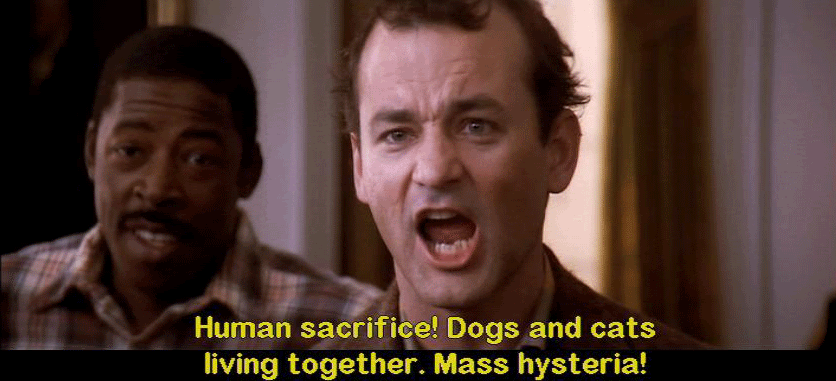
And don’t think this is limited to small-time editors. I’ve worked second-hand through a top 3 publisher editing firm, and the same type of crap comes through.
A lot, and I mean A LOT of writers put way too much on their editor. I guess some are so entitled, they expect the editor to fix everything even if they only paid for a line edit. But let’s be honest: If an editor is thirsty enough for business (operating out of Fiver or something), he just might swallow his pride and do a comprehensive edit, anyway.
But the real black pill is ghostwriting.
There’s an astounding number of folks out there with money to burn who make an entire career out of paying other people to write their books for them. Big names, small names, doesn’t matter. They send you a structure of what chapters they want and the ideas they want to get across, maybe they send you hours of audio recordings dictating their life story (loaded with pretention). They might even send you awful pre-typed blocks of text or speeches, with a demand that these must be put in the manuscript “as-is”.
I once edited a ghost-written book where a chapter was devoted to the “author” bragging about how he’d written an entire book on his own despite all the naysayers in his life saying he never would.
The naysayers will never know they were right.
Once you realize how many rich losers there are out there who don’t write a single one of their books–but promote themselves as if they were prolific authors–it’s depressing.
Depressing, yet sobering. Success is often an illusion. A lot of the industry is being carried on the backs of ghostwriters, so I salute them: The unappreciated behind-the-scene workhorses of the writing world.
Just know that if you manage to make it without stooping to paying others to do it for you, you’re more special than you know.
If I ever use ghostwriters or A.I. to write a story, it wouldn’t be fulfilling. Not only would I feel dirty about it, that’s just not my goal. My bucketlist would be left unfulfilled. In order for my books, and even my blog posts, to feel authentically mine, to feel like they are actual accomplishments, I don’t mind having to interchangeably wear writer and editor caps to see my visions all the way through.
Sure, your first drafts can be garbage, but you should try your best to send editors and publishers as polished a draft as you can. Show them you don’t need a babysitter. Show them you’re a professional and they’ll want to work with you time and again, and even offer you discounts (or pay you more) because they know you’ve already done most of the heavy lifting and won’t be yet another headache added to their plate.
Seeing how bad things really are for editors out there made it much easier for me to submit my work without fear. I learned the hard way that, even at my worst, I have nothing to be embarrassed or ashamed of. And neither should you.
The good news is if you can get a story across the finish line and at least edit a second draft, you’re already ahead of the game. If you’ve at least done that, you can and should submit with confidence.
 Nick Enlowe
One thought on “Adventures in Editing (and Ghostwriting)”