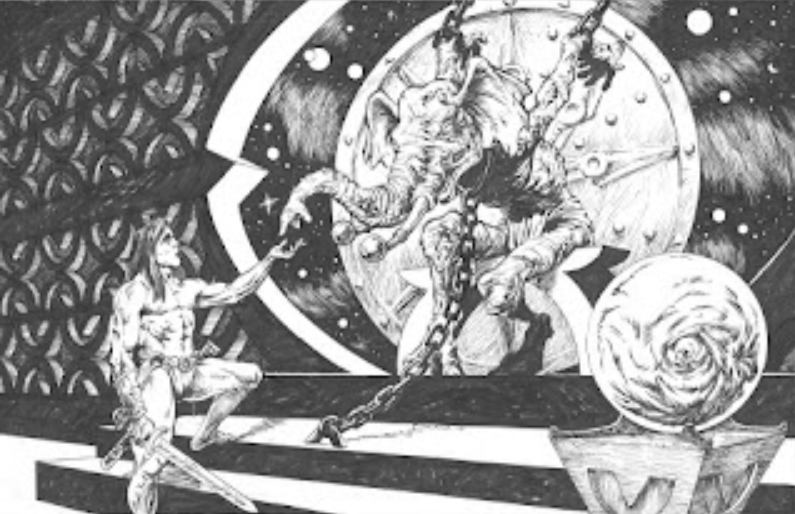
This is a continued exploration to help move the great genre of Sword and Sorcery forward to the #IronAge. In our effort, it’s probably a good idea to look back to the genre’s past.
Exhibit A: The Tower of the Elephant (1933)
Easily my favorite of the Robert E. Howard Conan yarns. If you can only read one of Howard’s works, heck, if you can only read one pulp story in your entire life, I would happily suggest TTotE.
You’ll likely come away a changed person. If you’ve never read good pulp before, you’ll notice the prose–especially at the start–is highly evocative, so rich on the page that it feels like art come to life. Like a skilled bard at the peak of his career caught in an eloquent flow.
It begins:
TORCHES flared murkily on the revels in the Maul, where the thieves of the east held carnival by night.
In the Maul they could carouse and roar as they liked, for honest people shunned the quarters, and watchmen, well paid with stained coins, did not interfere with their sport. Along the crooked, unsloppy puddles, drunken roisterers staggered, roaring. Steel glinted in the shadows where wolf preyed upon wolf, and from the darkness rose the shrill laughter of women, and the sounds of scufflings and strugglings.
Torchlight licked luridly from broken windows and wide-thrown doors, and out of those doors, stale smells of wine and rank sweaty bodies, clamor of drinking-jacks and fists hammered on rough tables, snatches of obscene songs, rushed like a blow in the face.
This is the kind of evocative prose you can expect from Sword & Sorcery, prose that thrusts you deep into its world with an immediacy that assaults your senses. Bite-sized escapism at its finest.
The second thing that will likely strike you is Robert E. Howard’s Conan is not the simple muscle-bound barbarian we got to know in the 1980s. He’s not anything like He-Man, and he’s not some dim hunk of meat that slaps women’s butts and mindlessly hacks and slashes his way through monsters with a broadsword.
Rather, Howard’s Conan has more nuance. He’s pragmatic. Though he’s still young in this particular story, you’ll find he’s a daring, enterprising, and cunning thief who fears magic and the unknown (as all men should). He’s brave to face these dangers precisely because he fears and respects them.
(Be warned – Spoilers moving forward…)
But one thing Conan does not respect, to my amusement, are bloviating philosophers:
He had squatted for hours in the courtyards of the philosophers, listening to the arguments of theologians and teachers, and come away in a haze of bewilderment, sure of only one thing, and that, that they were all touched in the head.
Makes me want to give this guy a fistbump.
Conan overhears a discussion about a tower which houses a valuable magic jewel called “The Elephant’s Heart”. This city is home to many of the best thieves in the world, so the fact that this particular item hasn’t been stolen yet piques his interest. In fact, he sees it as a challenge.
A skilled climber, he figures he can scale the walls. After all, he saw no guards in the area. But the bar patrons laugh and hint that something far more sinister is going on. Something supernatural.
Otherworldly guardians aside, Yara lives there, a feared priest rumored able to turn people into spiders with his magic, the jewel allegedly the source of his power.
But Conan doesn’t let it deter him. Thus, the stage is set for a heist. His plan is simple, if naive: Scale the outer walls of the compound, defeat whatever resistance he comes across, make his way to the top of a slick, smooth 150 foot tower, rappel in from the opening at the top, get the literal drop on Yara, and steal the jewel.
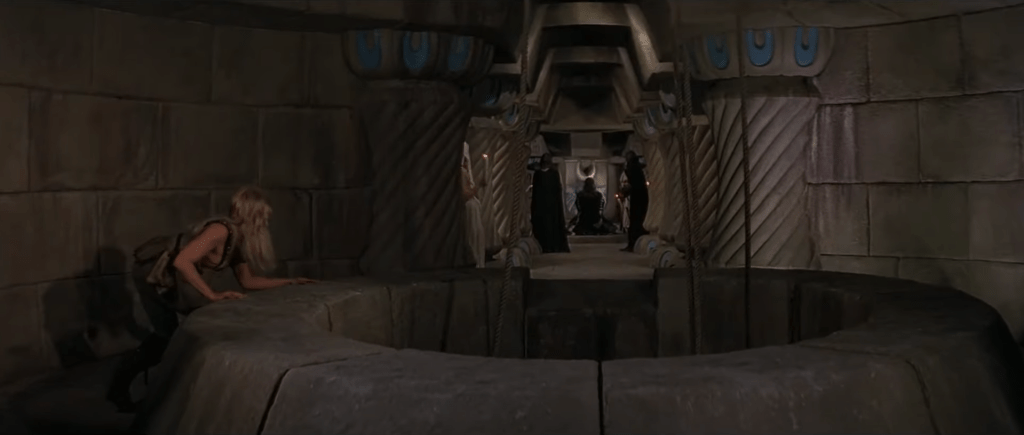
If you’ve seen the 1982 Conan the Barbarian movie, this tower may sound familiar as there’s a brief sideplot inspired by this story. But things go in a much different (and more interesting) direction here.
Conan moves forward with his plan and scales the outer walls only to find there’s an overwhelming number of lions guarding the elevated garden grounds. Fortunately, a thief named Taurus of Nemedia shows up to help him with a poison powder, hoping his help will convince Conan to split the profits.
But soon, Taurus proves himself more of a liability than a boon. In fact, he may as well have been wearing a Star Trek red shirt because not long after they descend into the tower proper, he’s used as a gruesome demonstration for just how dangerous the tower’s inhabitants and traps can be.
The Sword & Sorcery scorecard so far:
- Lone wolf main character.
- Morally gray.
- The only party member that shows up dies shortly after.
- Conan fears magic.
- Conan is brave and takes risks, but calculates for his own survival.
- Only the bad guy can use magic, and magic is presented as evil since it is not natural.
- The city itself is portrayed as evil, overrun with night markets, thieves, and prostitution.
- Taurus is hyperspecialized but shows up unprepared (doesn’t have enough poison powder to deal with all the guards).
- Conan constantly makes active decisions to propel the story forward.
- Lots of “Rule of Cool”.
- Elements of Weird Fiction, which are coming up.
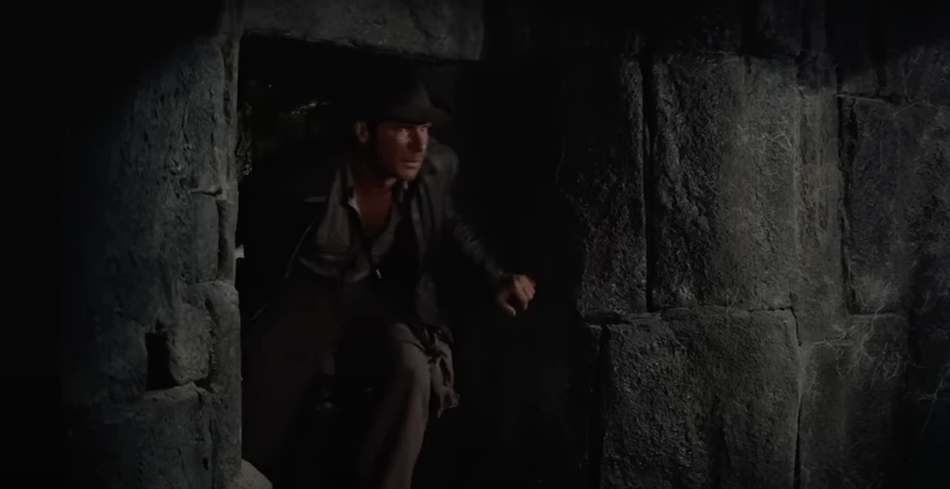
I don’t wish to spoil the ending, but the tower’s interior is my favorite part of the tale, a character in and of itself. I’m a fan of difficult dungeon crawls with traps and verticality. Think of the secret passageways in Indiana Jones and Temple of Doom, or the underground chambers in Young Sherlock Holmes and The Goonies.
Cool as the tower is, this dungeon adventure soon veers into Weird Fiction territory and goes absolutely Lovecraftian, artfully injecting Cosmic Horror elements, a masterclass example of underpromising and overdelivering. And testing the limits of your genre.
This is the kind of tale that could put the fear of God into anyone’s heart, and it’s a heck of a payoff.
Conclusion
While there’s a place for Heavy Metal He-Man Blood & Thunder, I don’t think it’s the future for Sword & Sorcery.
Having Nathan Explosion chop through countless monsters may be badass in the moment, but there’s an artful subtlety to the best Sword & Sorcery has to offer; Badass dispensed in a slow crescendo with a measured hand. A textured depth that goes beyond mere grit and killcount.
Even way back in the 1930s, Robert E. Howard was showing us the way forward. It’s almost 100 years later and Conan is still the face of Sword & Sorcery. We need to shed the 1980s caricature Conan has become and start looking back to his roots for inspiration.
More to follow.
 Nick Enlowe
9 thoughts on “The Riddle of Iron Part 2: The Tower of the Elephant”