Part 1. (What is Sword & Sorcery?)
Part 2. (The Tower of the Elephant)
Part 3. (Jirel of Joiry)
Part 4. (The Historic Riddle of Steel)
Part 5. (The meaning behind the Riddle of Steel in the ‘Conan the Barbarian’ motion picture)
Part 6. (The Importance of “Appendix N”)
Join me as I try to answer “The Riddle of Iron” in a continued journey to help move the great genre of Sword and Sorcery forward, for the glory of the #IronAge.
Exhibit F: The Amorphous, Undefinable Chimera Known as the “Iron Age”
At the beginning of this series, I defined what Sword & Sorcery is. The “Iron Age” isn’t the same thing, of course, although S&S is heavily associated with the IronAge for several reasons.
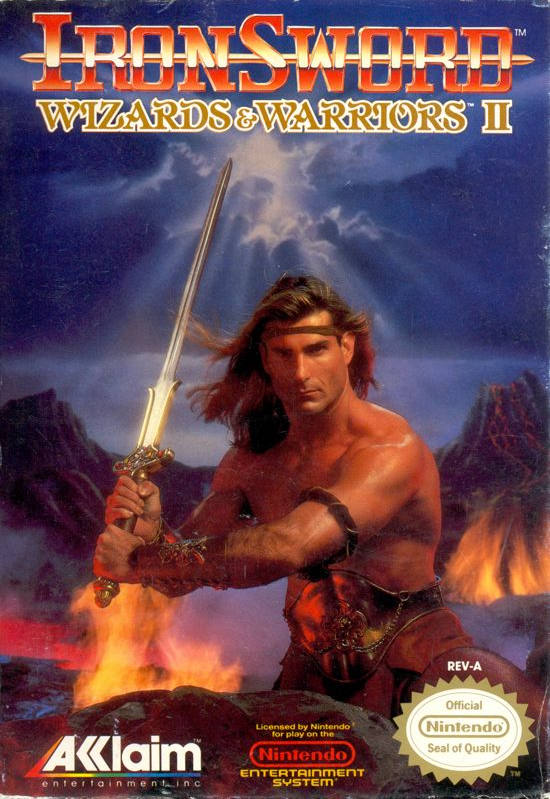
Both the subgenres Sword and Sorcery and Sword and Planet were where most of the fun seemed to be – You know, back when folks were writing escapism on pulp paper for a living – during that fabled Pre-Modern Classic Age.
There was also plenty of “literary fiction”, which is more than likely what you were forced to read in school most of the time if your childhood schooling happened post-1980.
That’s not to say some literary fiction isn’t good (Ray Bradbury comes to mind), but most of it is boring, and certainly not written in service of the truth.
When unshackled from Modernist views, writers tend to clue in on the Prime Mover and let that inform the meaning of their writing, hence, their writing becomes timeless.
And that’s exactly why TradPub and the “Education System” has tried to hide works from the era of Appendix N from you: For the most part, they can’t compete since they’re stuck viewing the world through a Modernist lens.
The literary world began to see major gatekeeping from the Big 5 publishers, especially in the early-to-mid seventies when it took over the convention scene. I have a particular Leigh Brackett interview from around ~1973 saved to my hard drive where she spoke on how shocking–and fundamentally wrong–this hostile takeover was. And that’s coming from someone who was known to refer to some men as “MCPs” (That is, ‘male-chauvinist pigs’. Lovely. But we’ll forgive her that for her awesome writing.)
I’ll share my thoughts on her historic interview at some point in the future, but I believe it exposes the whole feminist idea of “male gatekeeping” in science fiction and fantasy as an outright lie manufactured and perpetuated by the Big 5. For now, I digress.
Before I started this Riddle of Iron series, I wrote an article on the #IronAge movement itself. And it seems, while one can cobble together and infer a rough definition from this post, a clear and concise definition for the #IronAge was never given. And if it was, it may still not be self-evident enough for some. Even Raz0rfist‘s IronAge video, while passionate, doesn’t give an exact, clear definition. So let’s try and rectify that.
Definition of the #IronAge:
A literary movement; A label, coined by Raz0rfist, applied to the already-existing passion and desire to make an endrun around corporate gatekeepers to not only tell better stories, but to see those stories published, creating a parallel market that fills the void created by the mainstream media by offering what they won’t.
Similar movements have appeared before with a similar spirit, such as Brian Niemeier‘s #AGundamForUs movement, which birthed several anime style mecha novel franchises, including his own XSeed universe.
I am a newcomer to the IronAge and won’t pretend to speak for everyone, but that definition is my current interpretation of the #IronAge. And since, by my humble definition -ahem-, it is a movement, it’s bigger than any one person. No one person can stop it, and no single person has the right to declare it “dead”.
Mind, my definition includes a few unspoken–but built-in and heavily implied–expectations:
- If we’re creating works for a movement that opposes the mainstream, it stands to reason we must do things differently from the mainstream. We’re taking a stand against mainstream offerings specifically because they’re no fun anymore – too focused on pushing woke ideologies instead of focusing on telling a great story; they’re telling tales that no longer reflect traditional heroism and no longer uplift our respective cultures. Therefore, our stories should not be pushing intersectional agendas, should reflect traditional heroism, and should not denigrate our own culture. Otherwise, we will become that which we sought to destroy.
- Our stories need to be written in service of timeless truths. They cannot be weighed down by Modernist, Post-Modernist, and Meta-Modernist platitudes. These ideologies are what set most writers today apart from the pulp era. They’re the poison that puts pulp-era quality out of reach of so many current-day writers. We need to operate under a “Pulp-Era Mindset”. This includes rediscovering and uplifting ideals, such as virtue and beauty.
- Gatekeeping. We must keep the “stuff” that caused mainstream media to fail OUT of the #IronAge movement if we want it to succeed. That includes keeping out bad actors and bad ideologies, and we can’t rely on the Free Market to keep these bad elements out. There was a time when OldPub thought the Free Market would weed out Communist and Socialist ideas by principle, but they came in anyway thanks to bad actors positioning themselves into key gatekeeping positions.
So, since we haven’t been gatekeeping, we have to stop and ask ourselves whether or not we’ve already been gatekept.
It’s naïve to assume it’s not already being controlled to some extent. I’ve seen myself that there’s actors arguing in bad faith while operating under the #IronAge hashtag. We must recognize those who have positioned themselves as gatekeepers already, and keep in mind that Conservative, Inc. is going to tentacle its way into this movement, if it hasn’t already. That even includes lovable personalities signing contracts with Con Inc. outfits.
(And if you thought defining the IronAge was pompous, wait ’til you see what I do next):
Enlowe’s Law:
If any Right-of-Mao social media movement grows to sufficient size, unless sufficiently gatekept, Con Inc. will invariably circle their wagons and get their mitts on every control lever they can.
But why control such movements?
To prevent them from getting out of hand, of course. The levers are manipulated to capitulate to the Left, to the fence-sitter moderates (who don’t realize they’re already sitting to the Left thanks to the Overton Window shift), and to the investors, who wish to make these movements appear as “moderate” and “unthreatening” as possible. It also allows them to signal boost and take monetary advantage of existing grassroot movements.
Doomer Mentality
If the #IronAge is doomed to one day sink like a rusty ship hitting an iceberg, the spirit of the movement shall live on. The real writers, the ones who care, will continue to write and enjoy writing.
We could sit here trying to define what the IronAge is until we’re blue in the face, but at the end of the day, IronAge is just an apt label that happened to reflect an already-existing movement quite well. If this movement sunsets, those who care deeply about the pulp era–and amazing, fun genres like Sword & Sorcery–will continue to keep on writing what they love.
In the meanwhile, beware the pompous (yes, even more pompous than me) folks who make blanket all-or-nothing binary Doomer statements, acting like no one within the #IronAge movement could write their way out of a paper bag. Stating that everything, and I mean EVERYTHING published post-1980 is worthless, or that everything from the indie scene is worthless is going way too far.
The IronAge is still a young movement and the participants are still learning. If you’re one of those Doomers, find a little hope in your darkened heart. And if you happen across a piece that gets published which you find “decent enough”, don’t dismiss it and say the writer was “trying too hard”. Otherwise it fosters a scenario where the #IronAge writers feel like no matter what they do, they can’t win.
I’m certain that no matter how much work and passion you pour into a Sword & Sorcery tale, there’s certain people you could never please unless you were to take a time machine back to the 1930s to publish your work in Weird Tales. Which, now that I think about it, would actually make for a great weird tale.
So if you’re wizened and have something to teach us about the pulp era, great! Teach us. Don’t play coy games. Don’t send us on wild goose chases just for us to come back with a tale we poured our hearts and souls into only to be schoolmarm’d at some more, without actually stating what went wrong.
In the meanwhile, those of us who care and aren’t in the mood to sit here nitpicking every little S&S offering, opinion, and person who’s ever aligned themselves with the IronAge are still going to write, and we’re going to blow past you at 300 MPH.
But if the Doomers are right, then they’re going to be the ones who blow past us, and they’ll deserve their success.
 Nick Enlowe
5 thoughts on “The Riddle of Iron Part 7: What exactly IS the Iron Age?”