
Let’s solve the Riddle of Iron once and for all, for the glory of the #IronAge!
Part 1. (What is Sword & Sorcery?)
Part 2. (The Tower of the Elephant)
Part 3. (Jirel of Joiry)
Part 4. (The Historic Riddle of Steel)
Part 5. (The meaning behind the Riddle of Steel in the ‘Conan the Barbarian’ motion picture)
Part 6. (The Importance of “Appendix N”)
Part 7. (Definition for the #IronAge)
Part 8. (What NewPulp can teach us/Review for Tales From the Magician’s Skull #11)
Part 9. (Sword and Sorcery in Unexpected Places #1: The Maxx)
Part 10. (Sword and Sorcery in Unexpected Places #2: Goblin Slayer)
Sword and Sorcery in Unexpected Places #3: The Mandalorian
Okay, so The Mandalorian is more Sword & Planet than Sword & Sorcery. And Season 3 was unwatchable dreck. But hear me out.
The main character in Sword & Sorcery is almost always someone who operates in the margins. And from this outsider vantagepoint, he’s better able to criticize society by sticking to his moral code.
If you take into consideration Maxx, Goblin Slayer, and The Mandalorian, all three characters operate within the secrecy of unseen societal margins, all three wear face masks to conceal their identities, and two of the three wear heavy armor.
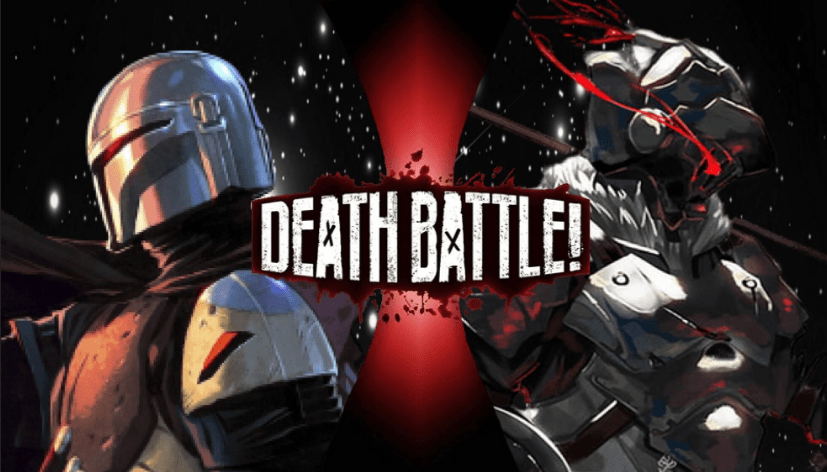
A hidden face suggests a face reveal will happen somewhere down the line, which itself is an excellent hook. But it also suggests a complex character is hidden beneath that mask. This is the same effect as a superhero harboring a secret identity, and it wasn’t uncommon in the pulp era with characters like Zorro.
But I do find the concept of a full face mask quite interesting.
Goblin Slayer and “Mando“ (Din) are much like Batman. They’re experts, detectives at heart. They use gadgets, projectiles, and grappling hooks to get themselves out of danger. They think outside the box, operating from the margins, hiding behind a mask.
While they don’t trust the system at large (the world, the government, etc.), they do trust some smaller system, something that makes more sense to them because it aligns with their core values. Din trusts “The Ancient Way of the Mandalore”. Goblin Slayer trusts “The Guild”. For them, it’s something tangible. Something real. Something to believe in. Something to defend.
And they have a near-religious devotion to it. Even thieves operating outside the margins tend to adhere to their “Thieves’ Code”. Conan’s belief in Crom is a constant undertone, guiding every decision he makes.
If your Sword & Sorcery main character scoffs at religion and society with a laissez-faire attitude, poking the bear from the shadows every chance he gets and criticizing the structured world when he has no structure in his own life, I’m afraid he’s being a bit of a hypocrite. Maybe even a villain.
You could always get away with such a main character in a one-shot, especially if it’s a comedy. But compelling characters need something to believe in to make it feel like their fights count for more than just “sticking it to the man”.
It’s difficult to write hyper-competent characters running around in plate/beskar armor without making it feel like they’re wearing a roughly equivalent amount of plot armor.
That’s why handing Din a baby to take care of was such a stroke of genius. The famed “Baby Yoda” (Grogu) was a brilliant echo of R2-D2 in that he is both a character and a MacGuffin. But it’s a growing and changing one, and the purpose of this MacGuffin is unclear, further adding to the mystery.
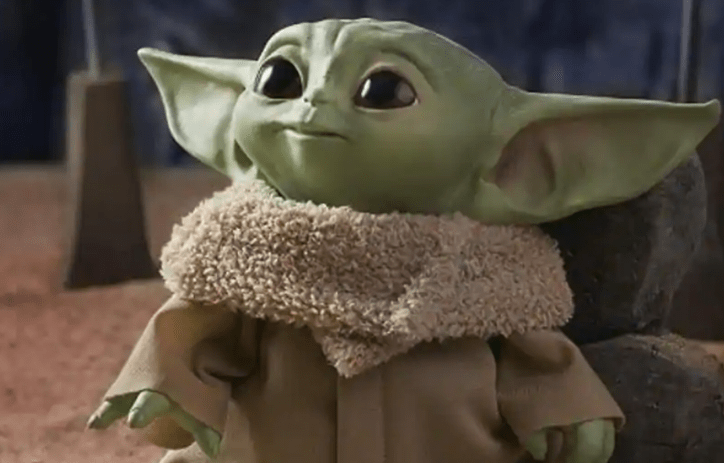
While Grogu’s powers become a bit too deus ex machina for my tastes–especially during season 2–he is first and foremost someone vulnerable for Din to protect. Grogu’s presence enables the the importance of fatherhood to be a constant undertone (a message the world can definitely use right now), and raises the stakes while simultaneously dragging personality and even empathy out of the otherwise cold-hearted killers that constantly surround him. Often to surprising effect.
Din feigns indifference at first, but sometimes he goes so far in his efforts to protect Grogu, it becomes clear that a co-dependence is forming, adding yet more depth to Din’s character.
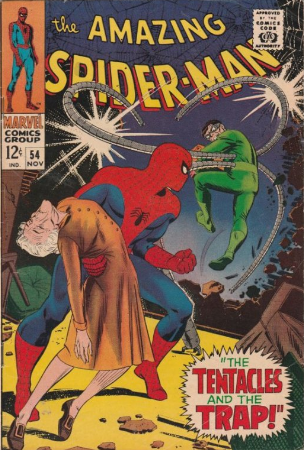
Grogu is to Din as Aunt May is to Spider-Man. Just as superheroes need someone vulnerable to protect, a great Sword & Sorcery main character should have someone like this as well. If possible, it should be someone dependent on the main character, but also someone the main character depends on. Someone you’d wonder if he’d be able to carry on without.
Calling The Mandolorian “Sword & Planet” isn’t a stretch by any means. There’s rayguns, but there’s also lightsabers a-plenty. George Lucas wanted Star Wars to be a big screen treatment of Flash Gordon serials, after all, and it borrows unflinchingly from pulp era space adventure writing (along with several Kurosawa swipes), especially in the 1977 classic. And of course, I’d be remiss if I didn’t again bring up the fact that famed Sword and Plant author Leigh Brackett was instrumental in helping shape The Empire Strikes Back into one of the greatest films ever made.
Summary
A great Sword & Sorcery main character should not only have something to protect, but someone, preferably through a co-dependent relationship.
The main character should believe in at least something, he shouldn’t seem invincible (ie: give him a weakness, even if it’s external), and if you can build a mystery, establishing intriguing hooks about who he is, all the better.
Final Thoughts on The Mandalorian
My opinion on The Mandalorian starts with not giving money to people who hate you. This IP is sadly a part of the House of Mouse. I admit Season 1 and even Season 2 were promising – It was the first glimmer of hope for the franchise in a long, long time.
The first three episodes form an excellent storytelling arc (which would’ve been worthy as a great standalone mid-budget Star Wars movie on their own merit), and the last two episodes of season 1, while not on the same level of the first three, bring together the mid-season vignettes in a cohesive and satisfying way.
If you go into the rest of Season 1 with low expectations and ignore the occasional plot hole, you can have some campy, pulpy fun.
Most of season 2 was fantastic despite some control falling into Kathleen Kennedy’s Darth Vader-like grip, but alas the show couldn’t survive her meddling for even a single episode of Season 3, let alone all the insipid low IQ spin-offs that occurred in the interim.
In case I wasn’t crystal clear, if you ever want to watch this show at all, stop at the end of season 2. If Season 3 being terrible isn’t reason enough to stop, don’t forget that Disney threw actress Gina Carano under the bus for purely political reasons, so I would strongly suggest either boycotting the show (and all of Star Wars entirely), or watching it – ahem – any way you can.
 Nick Enlowe
One thought on “The Riddle of Iron Part 11: Sword and Sorcery in Unexpected Places #3: The Mandalorian”