Just a few days ago, someone suggested to me that the only valid answer to the Riddle of Steel is “Will”.
I did discuss that Will is the typical Nietzschean answer in my article, and even acknowledged that the movie opens with a quote from Nietzsche himself. I also acknowledged that there are many possible answers one can arrive at.
But my conclusion, driven by my own past experiences and wisdom, was different than the typical takes. And people having different things to say about a subject is what keeps the world interesting, varied, and cultural.
It’s not that conclusions should always be contrary to the mainstream, but if I didn’t follow my own heart and intuition–and instead echoed what countless others have already said about the Riddle of Steel–to me, that particular blog post wouldn’t have been worth writing.
I apply that same style of logic to my fiction: I want to explore new literary territory, say things that have never been said before, and restate old truths in new and interesting ways.
Having something to say is important for all writers. And the first step to having something to say is cross-examining the world we live in. We should pay attention to what everyone takes for granted, and even sometimes question what everyone believes to be true.
The Sin of Critical Thinking

Being critical and skeptical had me asking my teachers (back in the 1980s) why I could taste sweetness on the “bitter” parts of my tongue, why we were required by the FDA to eat so much bread every single day, and I recall asking my parents just how many “parts” there were supposed to be to a “balanced” breakfast.
Is a bowl of cereal with milk, two slices of buttered margarine’d toast, a full glass of milk, a further carafe of milk, a full glass of orange juice, and (sometimes) an apple really necessary when I’m getting ready for school?
Also, am I supposed to have room for more meals later? Because I’ve still got to eat my government-approved lunch that includes a desert and a chocolate skim milk before I find a way to down the recommended eight glasses of water a day, all before the stroke of midnight.

But it shouldn’t have been our job as children to question this nonsense. Our teachers and parents should have done that. Instead, they got snippy and protective about what was printed there, just as they do today about Common Core math.
Pluto’s the ninth planet. The Brontosaurus is real. The Fed is part of our government. If you get any degree, you can have any job you want. We should dedicate 3/4ths of our US History textbooks to tired and long-dead Civil Rights issues. Teaching young children vivid details about drugs and sex is a great idea.
When teachers, parents, and politicians would bother asking questions, it would be about the wrong things from a misinformed perspective, such as rallying against Dungeons & Dragons because they were led to do so by the news and by televised rags like 60 Minutes.
And when they would bark up the right tree, like with the so-called “Satanic Panic”, the news and comedians would circle their wagons, re-brand their fear with a humiliating label, and make it seem like a conspiracy theory in the old “Nothing to see here” routine, all so politicians and Hollywood could continue trafficking children and performing underground rituals with impunity.
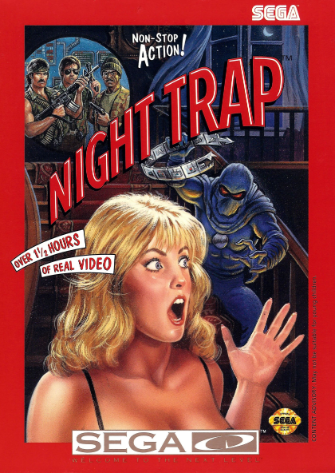
A big media mislead was how terrible video games were, pointing their collective accusatory fingers toward Night Trap for Sega CD of all titles, a relatively mild and tame game that almost no kid actually played. This dog and pony Congressional hearing also served to further divide Gen Y from their clueless parents.
Of course, if they would have bothered to actually spend time with their kids and take an active role in their interests, all this misinformation and confusion nonsense could have been avoided, millions of tax dollars could have been saved, and we still might even be friends to this day.
But now those same parents are more addicted to their iPhones than we ever were to our Nintendo Entertainment Systems, and they’re getting a far more meaningless and hedonistic experience out of it, too.
They’re watching dirty, disgusting advertisements on their casino apps and pay2win clickbait titles the likes of which are far, far too risqué for the likes of Night Trap, whose B-movie quality scene-in-question was extremely minor: a woman completely covered in a bath towel briefly stepping out of a shower, an obscure scene which was near the end of the entire game on CD number 2 of 2 and required a specific game over scenario which most teens didn’t have the skill or patience required to reach.
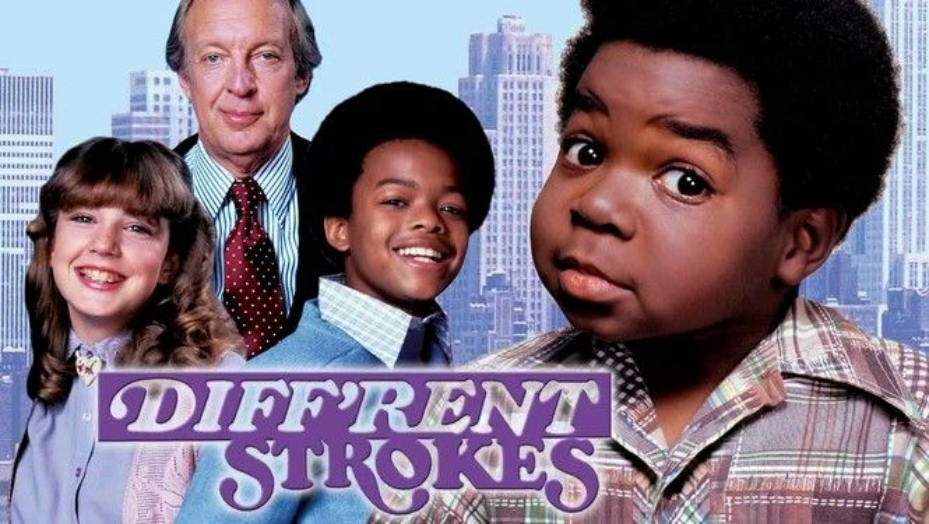
If parents weren’t told they were supposed to be offended by this scene, they wouldn’t have cared; There were far more offensive scenes in Different Strokes and Webster.
These days, children are especially dissuaded from questioning anything, let alone what’s printed in their textbooks. They’re taught to “stay in their lane” rather than engage in critical thinking and discourse for fear that it might “offend” someone. Especially if their skin is a certain color – which teaches racism, by the way, ironically bringing back those aforementioned long-dead Civil Rights issues.

The student above researched and took the time to prepare an hour-long presentation only to be cancel-cultured from two school clubs for the crime of critical thinking. Although in this case I think he was left more galvanized than dissuaded. But putting forth an honest effort like this used to be awarded with an A+ and would have been applauded in any previous decade.
As far as the subject matter, I shouldn’t even have to state why banned books are a sham. Heck, several of my local bookstores have their employees wearing “Read Banned Books” shirts in six-color rainbow print.

The long and short of it is it’s become a marketing ploy, another way to “stick-it-to-the-man” by reading exactly what the government wants you to read. Just take a look at which banned books can get your seller account removed from Amazon vs. the newcomer titles recently added to the list. All disturbing, all guaranteed best-sellers, and all propaganda. Meanwhile, these same people are unironically censoring future prints and ebooks of George Orwell’s 1984. The purchase of which I’ve heard will now land you on a government watchlist, by the way.
Somewhere along the line, I guess our elder generations forgot that thinking outside the box is exactly what saved the lives of the Apollo 13 crew, caused so much rampant innovation, and ultimately made the U.S. become a superpower.
Or maybe they didn’t forget, the implications of which are rather dire.
 Nick Enlowe
3 thoughts on “Different Interpretations are Okay (part 1)”