(Part 1 can be found here.)
When I hear a literary scholar lecturing a class on how to interpret a story, I find the take interesting, but I certainly don’t consider it the only way to interpret the story.
Some professors get particularly smug and feel it is the only way, though, to the point where they’ll fail you if you don’t agree.
Professors like this have spent so much time with the same stories that they start to feel a sense of ownership. They’ve done their research and drawn their conclusions many years ago. And then on each re-read, they’re hunting for more and more evidence that supports their interpretation as the only correct one. They do this through a process called confirmation bias.
And the funny thing about confirmation bias is–thanks to our brains being hardwired for pattern recognition–if you’re looking for evidence, you’re almost certain to find it.
Authors can be just as stubborn:

See, this curmudgeon-y letter just makes me think the old man is Ernest Hemingway, the ocean is the world, and the sharks are all the literary scholars trying to apply symbolism to his tale.
The boy is likely a bored student stuck in a literature class feeling like three o’clock will never strike, trying to fish for a story that excites him in an ocean of boring state-approved literary fiction.
But Hemingway is not alone. I regularly see writers go public, complaining about some reader misinterpreting their work. Even Tolkien complained about allegories… until he begrudgingly admitted his stories were allegories, too.
A literature professor once told me an interesting story…
One of his expectations for the semester was to have each student write a poem and recite it to the class.
He recalled a time when a girl was reading a poem (which I believe was about a hike along a nature trail). And, according to the professor, an older student in the class began to weep.
Obviously, her poem had moved him deeply.
He shared that it reminded him of the sorrow he felt losing his comrades in the Vietnam War, and as a result, it had become his new favorite poem.
Now obviously the poet didn’t intend for this meaning, but who was she to tell him his interpretation was wrong and take that emotional moment away from him?
The author? Sure. She’s the author. And the author’s intent does matter. But authors also need to understand that their stories may have more meaning and nuance than they ever intended.
Stories can and will hold different meanings for different people. And when you send your stories out into the world, they tend to take on a life of their own.
This is a healthy phenomenon. It’s much like how authors need to leave breathing room for the reader’s imagination to take flight. If every little detail of the world is explained in purple prose, it tells readers exactly how large–and how small–your fictional world is.
Just like how writers write through pattern recognition, readers interpret stories through pattern recognition. And they just might discover a different pattern than you intended.
That may seem like a failure on the author’s part, but it’s not. It’s actually a sign that you did things right.
If the author holds back on purple prose, it can make the world seem much larger than it actually is, thus creating the illusion of a living world which provides a more immersive experience for the reader.
Readers prefer that breathing room, and you’ll tend to find it in more complex works. These are the stories that timeless fandoms are built upon.
The only time a different interpretation is bad is when it suggests the writer intended something devious he actually did not, such as accusing him of making the monsters in the story an analogy for illegal immigrants, or other such similar nonsense.

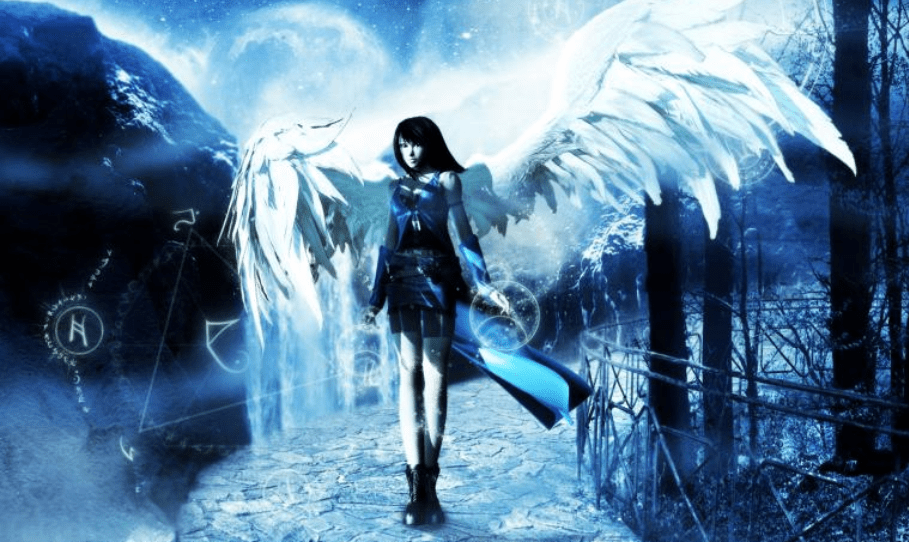
There’s a popular Final Fantasy VIII fan theory called “Rinoa is Ultimecia”. Not only does this theory fix nearly every plothole in the game and give the final boss real meaning and purpose, but it’s fully supported by the script and visuals in both theme and nuance.
There are many fans out there who dismiss this theory outright based on a single interview translated to English with one of the team members, who famously (and bluntly) said it’s not true.
It is therefore not considered “canon”, and some fansites go so far as to ban members for even mentioning it.
Which kills a lot of potential interesting conversation. If fans are barred from discussing various story interpretations, or even from coming up with some of their own, it’s not as much fun to talk about the game or be a fan.
Of course, hundreds of staff members worked on Final Fantasy VIII. The development was described as “turbulent” and not every team member was necessarily made privy to all the ins and outs of the story.
None-the-less, no one considers that other team members may have worked this plot thread into the game on purpose, or that the writers may have subconsciously included it without fully realizing the meaning within the story. (This is typically a sign that the story is underbaked, which is indeed a common criticism lobbed at the infamous eighth installment.)
Either way, the brilliance of this theory vs. the rabid gatekeeping by fans is why I find “Rinoa is Ultimecia” particularly interesting.
Conclusion
The point of this whole series was to say it’s okay to walk away from a story with your own interpretation. And it’s good to consider interpretations that differ from yours. Story interpretation is one of the best mind exercises that money can’t buy.
But don’t let the writer, some pompous professor, or even a group of overzealous fans bully you into accepting their interpretation as the only valid one.
If you happen to be one of those writers who feel the need to correct your fans, try and let a few of them have their own interpretation every once in a while. They took the time to read your story which is already a beautiful thing. And they’ve gone through such an experience that it has them thinking about it days later.
When a story keeps turning itself over in your head, it means it has substance. It’s grown into something greater than the sum of its parts.
Sometimes it’s better to let those interpretations naturally bloom into philosophical discussions. Who knows? Some of the takes might even be genius, great leads as to where you might take your story in future installments.
 Nick Enlowe
One thought on “Different Interpretations are Okay (final)”