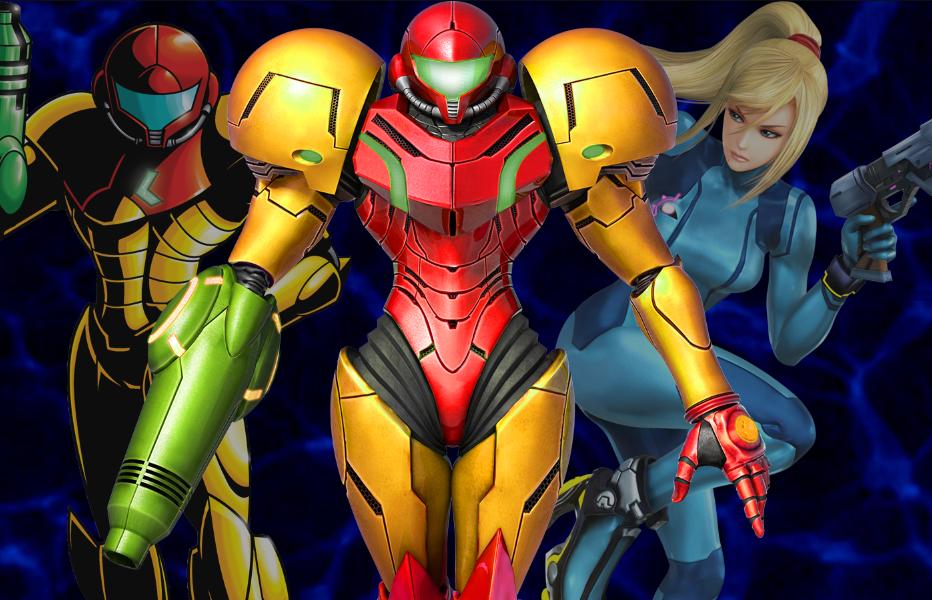
In 1986, a video game called Metroid got released for the Nintendo Entertainment System to critical and commercial acclaim. The game was highly atmospheric and featured exploration-style gameplay similar to the likes of Adventure, Pitfall, and The Legend of Zelda. If you completed the game fast enough, there was a “face reveal” at the end for our helmeted adventurer. (It turned out Samus was female.)
37 years later, it’s the midwinter of Current Year. And the official narrative goes something like this:
Young boys (and the video game industry in general) were sexist in the 1980s. That’s why most video games had male protagonists. (Females would have totally been playing more video games back then–if only there were more female representation.)
So when insular-minded suburban males beat Metroid only to find they’d been playing as a female all along, it challenged their simple-minded Patriarchal assumptions, blew their minds, and became the siren call for future male feminists everywhere.
(The “swimsuit” ending and later sexualization of Samus is “cringe”, and just serves to further prove the point.)
If you grew up in the 80s and remember the Metroid reveal differently than above, you’re just a sexist, insecure, lying pig who is retroactively making up non-sexist memories you didn’t actually have.
I wish the above was a strawman, but there’s a lot of people out there who unironically believe this stuff. (And I’m sick of seeing and hearing the 80’s get re-written to mislead younger generations.)
It just so happens I grew up in the 1980’s. And not only did I own Metroid, but it was the very first video game I ever picked out and bought for any system. Needless to say, this game is very near and dear to me. I played it to death. And boy, do I remember things differently. So it’s time to set the record straight.
It was early 1987. I’d just gotten an NES for Christmas ’86 (Most kids didn’t get an NES until at least a year later, so this was very exciting, the best Christmas I can remember). And it came with four “black box” games: Duck Hunt, Gyromite, Donkey Kong, Jr., and Kung Fu.
While all four games were great, they were basically arcade experiences. That is, there wasn’t a lot of meat to these games beyond mastery and chasing new personal high scores.
In the span of a few months, I could cycle Donkey Kong, Jr. and Kung Fu over and over again like nobody’s business. I could at least score over 700,000 points on DK Jr. at seven years old, so I was unusually good at games, even among my peers.
My console also came with this poster:
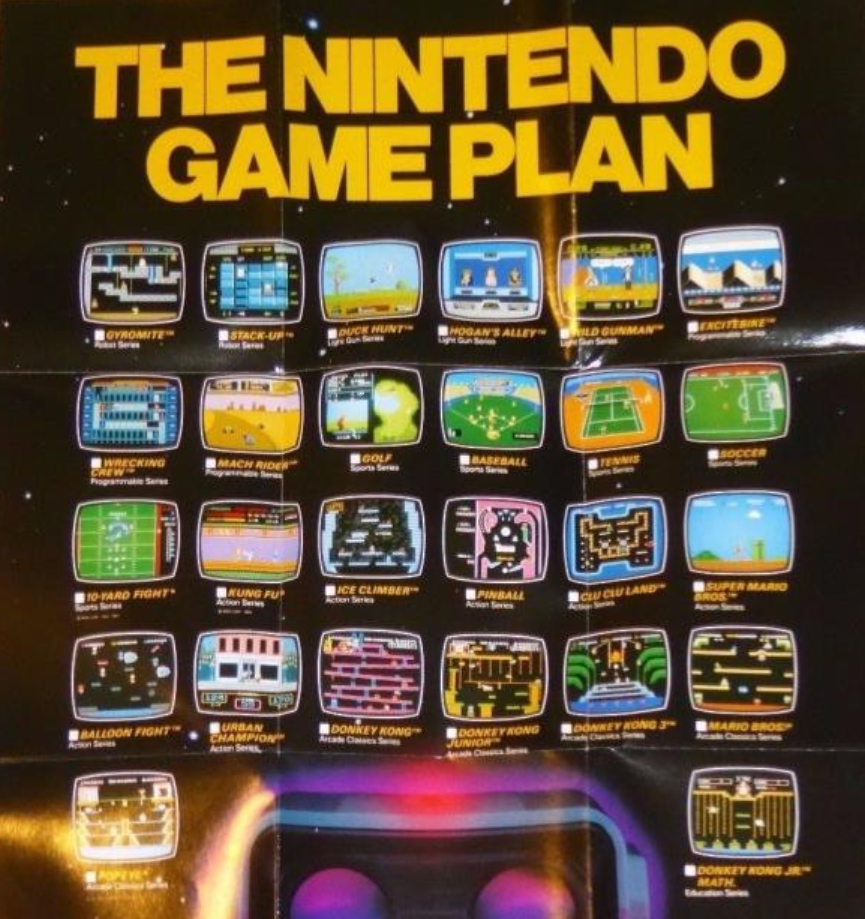
I used to spend hours pouring over this thing, trying to imagine what each game was like. Aside from the games I already had, I was quite familiar with Popeye (as I’d played it on our Atari 5200). But Wrecking Crew, Donkey Kong 3, and Clu Clu Land especially perplexed me. I couldn’t imagine what kind of gameplay would fit those screen layouts.
Aside from those, Donkey Kong Jr. Math was right out. I wasn’t interested in the sports games, either. I was particularly intrigued by Super Mario Bros., Mach Rider, and Ice Climber.
With my imagination in overdrive and desire in my heart, my father drove me to K’s Merchandise and I was allowed to pick one more game.
There was an endcap display near the registers with nothing but black box games… and one silver box with bold orange text that stood out more than the others. I recognized it instantly.
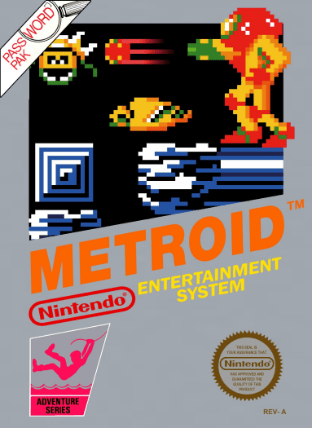
But how did I recognize Metroid?
That’s easy: There was a commercial for it that aired alongside Saturday morning cartoons.
It showed a guy with a raygun in a jumpsuit doing somersault flips and landing on free-standing brimstone platforms. It even had a black background – just like you see on the cover.
So OF COURSE I wanted to play a game where you can flip in the air and shoot aliens, and since you can put in passwords to continue, surely it’s not just an arcade-y score-chasing experience. So how could I pass it up?
I couldn’t.
And yes, I did say guy:
Yeah, this guy in the silver jumpsuit, making a face almost too cool for standard definition TVs:

And as far as I (and most other 80s kids) knew, that guy, right up there, was Samus.
You know what else? I read the instruction booklet on the way home, and I read it a lot. At school, on the fuzzy owl rug in my bedroom, and even during field trips. Back then kids read the crap out of their instruction manuals because it was an integral part of the story, the presentation, and worldbuilding. It was fun to get hints on what’s to come and learn about some of the power-ups and creatures you might come across during your adventure.
Here’s one of the pages:
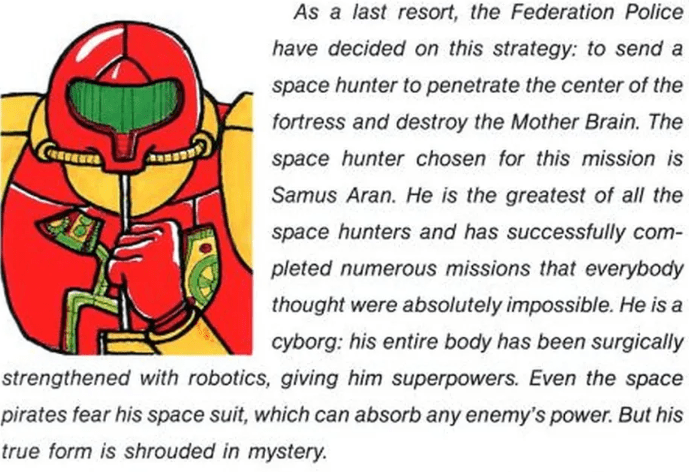
There’s a subtle hint that there’s “something more” to this character in that last “shrouded in mystery” line. But guessing, “It’s actually a woman,” wouldn’t make any sense, given that the instruction booklet had just told us it’s a bloke.

In fact, the booklet consistently refers to Samus as a male cyborg over and over again. A much better guess, given the context, would’ve been he never takes off his suit because he’s been in a gruesome accident and needs it to live, etc. That would at least help explain why he has cybernetic parts.
So that’s two misleads so far.
I purchased Metroid with no expectations other than being able to flip in the air and shoot aliens. And it delivered that in spades. I had no idea it would be an exploration-based platformer (which was still a new concept that would help spawn the now widely popular “Metroidvania” subgenre), and the only reason I went in expecting a male main character was because both the commercial and the instruction booklet straight-up lied to me. Why would they lie to children about such a thing? For marketing purposes? Perhaps.
But wait-a-minute: The official Current Year narrative says that boys went into this game presupposing the main character was male solely because they were naturally sexist, as if they were running around wearing “Boy Power” and “Fight the Matriarchy” t-shirts.
But no. Most of us were just off the heels of playing Atari 2600 games where the majority of characters were depicted as literal rectangles. We used our imaginations and were far too amazed by this technology in general to care about the sex of the main characters. We were actually moving things around on the TV screen (–which still felt like technical wonder wizardry!), and we were on the hunt for FUN games. Cool games we could talk about with other kids on the playground. Whether or not the main character was male or female was far from our minds.
Of course, we weren’t interested in video games about Barbie or fashion, but neither were girls. Female gamers were between 8 and 11 percent of the gaming population back then, and that’s being generous. Many of those “girl gamers” either had brothers and considered themselves “tomboys”, or kept to themselves for fear of getting made fun of at school.
At any rate, the female gamers I knew were playing the same games as the rest of us. They were just as happy playing Mega Man 2 as they were playing Metroid. They didn’t need to identify with the main character to have fun with a video game, and neither did we.
Still, the industry understood the reality that girls generally didn’t like playing video games (or most other nerdy stuff during the 8-bit era). And that was okay. They really didn’t get into female-centric games until many years later when graphics got much more sophisticated and could depict far more detail to better simulate hair, clothing, etc. And even then, girl gamers were playing games like Halo right alongside Animal Crossing. And–wouldn’t you know it–guys played a lot of those “girly” games, too. Because again, all we were looking for was fun games.
I remember trying to pronounce Samus’ name, and my mom said, oh, that’s pronounced “Shamus”. Which of course was a male name typically attributed to Irish coppers and private eyes.
Now, my mom was smart – the kind of person who did her crossword puzzles with a pen and would blurt out all the Jeopardy answers. But even she didn’t realize Samus was the female Celtic form of Séamus. And if she didn’t know it, then neither did most anyone else in the pre-internet age.
For me, at least, this was mislead number three.
 Nick Enlowe
7 thoughts on “The Metroid Reveal was a Dirty Setup (part 1)”