Part 1 here.
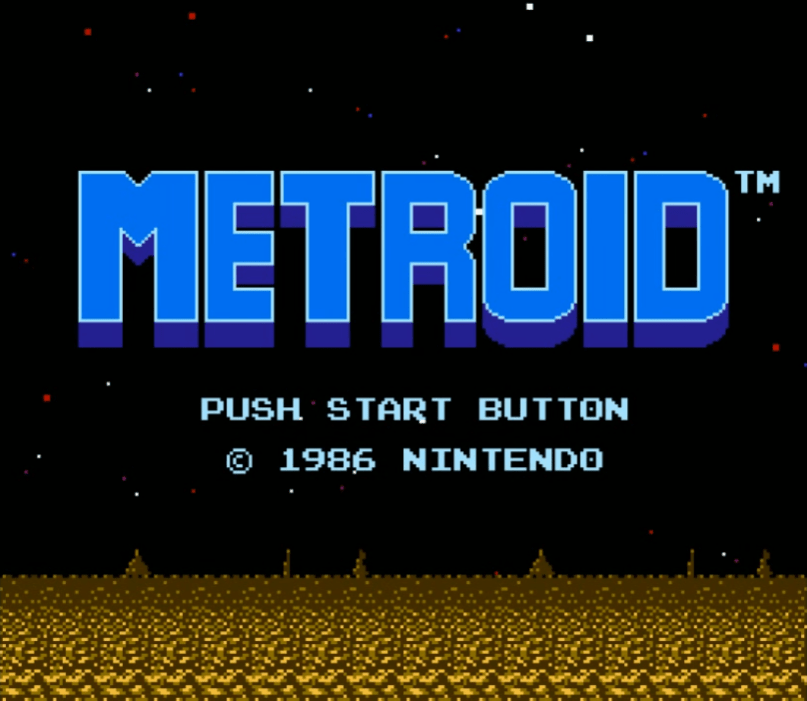
Right away, the world of Metroid pulled me in. The title screen had this haunting deep bass theme, powerful, yet so sparse as to be disquieting, almost daring me to enter its world despite my age.
It was at that moment I knew I was in for something more than what my handful of Black Box arcade games and Atari 5200 library had to offer. This was something deeper. Something darker.
If one lingers on the title screen long enough, it speaks of an adversary: “Mother Brain”. The message refers to it as a “Mechanical Life Vein”. In the Instruction Booklet, it was depicted as a question mark, adding even more to the mystery:
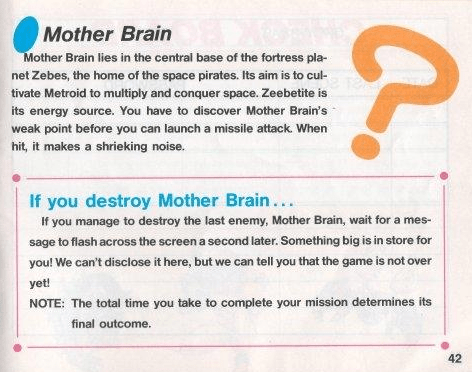
I didn’t know that central computers were sometimes referred to as mother brains, so my imagination was running wild, picturing some kind of giant mechanical female alien.
Would I run into “space pirates” on my journey? Who or what the heck is “Zeebetite”? And what about the mysterious message at the bottom that promises “something big”? The manual says it has something to do with completion time, which was another concept I’d never seen before in a video game, except perhaps through time trials in racing games like Pole Position, or in beating arbitrary timers to the ends of stages before you lose a life, such as in Donkey Kong and Donkey Kong Jr.
It’s important to understand this was a truly organic journey that’s impossible to replicate today, and tremendously difficult to communicate to the younger audiences who were not there to experience it.
(To give you a better frame of reference, Castlevania wouldn’t be released for another few months, and I’d never played or even seen Super Mario Bros. or The Legend of Zelda; The first issue of Nintendo Power wouldn’t be released until more than a full year later, and Captain N – The Game Master–with its garish (and woefully inaccurate) cartoon depiction of Mother Brain–wouldn’t air on TV for another three full years.)
Interestingly at this point, my young brain, due to all the misleads it had been dealt, referred to the final boss as a “she”, and Samus as a “he”.
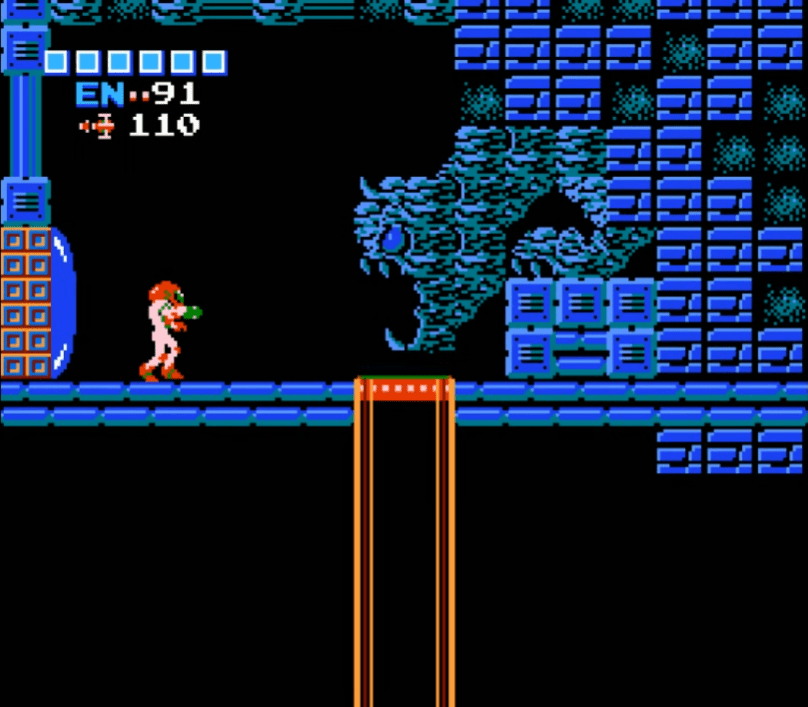
The main character, shrouded in mystery, phases into this strange, rocky landscape with creepy, shrine-like sculptures peppering the landscape, hinting at some ancient, primitive culture.

The music of “Brinstar”, the first area of the game, had all the tender ministrations of an acoustic guitar and the backgrounds were pitch black, always hinting at something more.
Being able to perform a somersault jump anytime I wanted was as satisfying as I imagined it would be, and I was astounded you could choose to go left or right from the start. What’s more, you could freely backtrack, a rarity back then, and the game trained me to understand these new concepts as I went along. For example, if you were to head right before heading left, you’d inevitably reach a dead end, forcing you to backtrack.
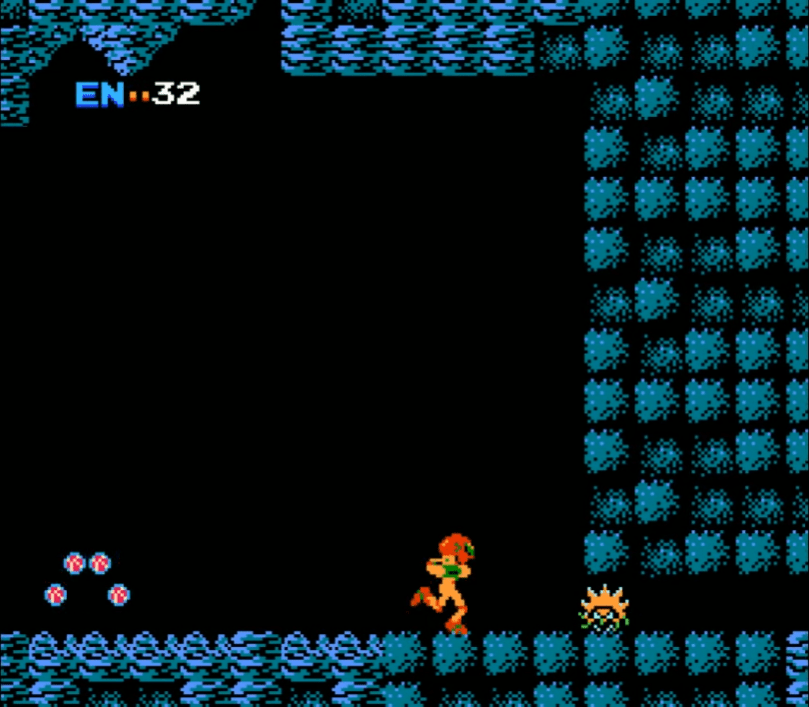
Even the very first corridor hints at something interesting awaiting below, something you won’t be able to access for quite some time. But it sticks in your mind because it stands out as something different. Something noticeable.
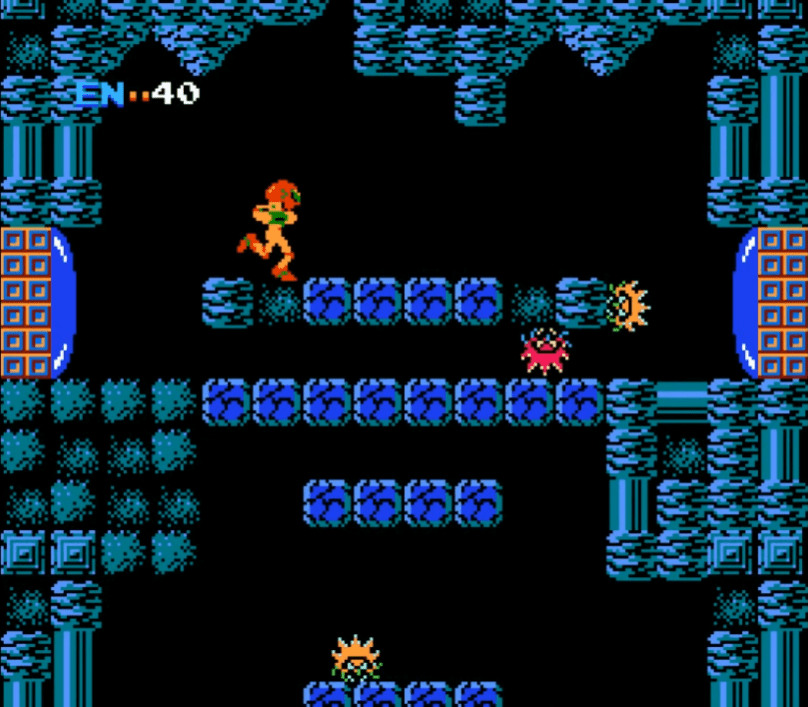
This design philosophy pervades the entire adventure, guiding players with a silent and subtle tutorial, always showing instead of telling. Using atmosphere to its advantage, helping the player memorize which areas will be key, and most important to revisit.
Metroid was far more innovative than people give it credit for, and, as we’ll see, my little mind was not quite ready for it.
 Nick Enlowe
One thought on “The Metroid Reveal was a Dirty Setup (part 2)”