
You’ll hear fellow authors assure you there’s no need to safeguard your best ideas. They’ll say things like, “Ideas are cheap. Execution is key.”
And to a certain extent, that’s true. But some of the biggest sellers out there were not written with perfect execution. Far from it. They were born of a great (or at least gimmicky enough) idea that inspired the masses.
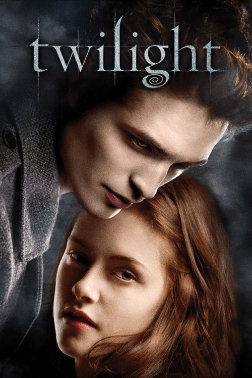
Most seasoned authors act like they get 10 great ideas every time they sit down to drink a cup of coffee. But all ideas are not created equally. While brainstorming and taking the craft of writing seriously, it is realistic you’ll stumble upon an idea you’d best keep under your hat.
Brandon Sanderson starts his classes with a lecture called, “Ideas are cheap” where he talks about how Jim Butcher got into a flamewar about good ideas vs. execution. Jim challenged his rando opponent into into giving him two “terrible ideas” for a story in response to a “put your money where your mouth is” challenge.

The key is, Jim knew what he was doing when he asked for two ideas instead of one, knowing he could blend them together in whatever way he pleased.
What’s worse, instead of ideas, the rando actually gave him two highly interesting and robust subjects: The Lost Roman Legion and Pokémon.
That book became the beginning of a bestseller series known as The Codex Alera.
Now don’t get me wrong. Brandon’s lecture is a story that’s easy to swallow and fun to disseminate.
But what Brandon fails to address is that crossing together two existing ideas (or properties, or historical events) that resonate with each other, while derivative, is the second-best thing to having a truly inspired original idea. Many of the bestsellers out there who crank out stories like they’re on an assembly line often cross X with Y in an unlikely, but inspired pairing.
None-the-less, Brandon tries to sell the thought that Pokémon and the Lost Roman Legion are “bad ideas” while in reality, they’re both rich tapestries to draw from.
Pokémon is a stronger IP than Harry Potter. It’s a strong enough universe to have its own theme park. In fact, it’s the highest grossing media franchise of all-time, clocking in at $92 billion USD, twelve billion ahead of its nearest competitor, Hello Kitty.

It got its start in 1996, yet still outshined the likes of Mickey Mouse at ($70 billion) and Star Wars ($65 billion). Harry Potter, the franchise that made J.K. Rowling wealthier than the Queen of England? $31 billion. The entire MCU? $29 billion. Gundam and Batman? Both weigh in at about $26 billion.
And who the heck wouldn’t want to write about the Lost Roman Legion? The Legio IX Hispana is not an idea, it’s a historic army surrounded by ~200 years of rich lore and events.

When scrutinized, the situation starts looking less like an organic flamewar and more like a publicity stunt. An effective one, granted. Either that, or he got lucky that the rando not only gave him two exquisite properties to work with, but a marketable/viral creation story to boot.
(Mind, this is all speculation. And I wouldn’t fault Mr. Butcher for doing this. It’s hard enough these days to battle the Amazon algorithm and wrest eyes off of the moronic and undeserving bestsellers you see lining the shelves at Wal-Mart.)
I’ve been coaxed into sharing some of my best ideas in the past with other authors, only to see those ideas, to my dismay, taken and professionally published.
I’ve seen authors share their own book ideas on Facebook, only for another group member to write a book based on that author’s idea, and in one case, the rival author used A.I. to pull it off.
Many authors are businessmen at heart, and many businessmen have little to no ethics when it comes to profits. Just do a search on YouTube for all the “authors” pissing low effort A.I. generated novels onto Amazon for a passive income stream if you want to see the dark underbelly of self-publishing. (These are the same stooges that abuse ghostwriters and claim all the glory.)
A.I. is not perfect, but the bar has been immensely lowered on the skill levels required to turn a great idea into a salable product. It can even generate 100 ideas for you if you ask it to.
But I guarantee you, if you’re a truly creative author, you’re going to always be able to come up with better, more inspired ideas than an A.I. could ever churn out. YOUR ideas will be based on and informed by your own life experiences. And the truly inspired ideas are the ones that are not derivative of other existing ideas. They are the ones that explore new, exciting ground. They are the ones worth deriving from.
You do have to separate the wheat from the chaff, and execute well on that wheat. If you’re a skilled writer, don’t just give your wheat away unless you’re feeling charitable; Even the chaff can help inspire an “x meets y” idea crossover.

I’m going to seemingly segue and tell you a story about D.D.R. (Dance Dance Revolution. Yes, that game.) It was the early 2000s and a friend and I had entered a doubles freestyle tournament.

The judges were to score each performance based on originality, execution, and fun-factor. We rehearsed and figured out a fun routine, memorized the steps, and were ready to go.
While waiting in line, my roommate at the time–whom I also considered a very good friend–was one spot ahead of me with his dance partner. He told us about his routine and … I guess I was so excited about ours, I ended up sharing our key move that we planned to do during the performance, and told him to look forward to it.
Imagine how stunned I was when my longtime friend and roommate betrayed my trust and performed the move I’d just shared with him to uproarious applause. He executed our stunt well and it drove the entire room wild.
My dismayed partner and I were next. With our signature move stolen, it would look bad if we were to execute it, because it would look like we’d stolen it off of the previous act. We were in quite a spot, and trying to explain the delicate situation to the amped up, riley crowd would’ve made us look even worse.
We weren’t sure what to do. With our lynchpin stunt that the routine was based around now stolen, we did our best to improvise, but were ultimately booed offstage.
My old roommate and his partner got the win. He was willing to throw our friendship into the toilet for the “glory” of winning a lousy D.D.R. tournament. So imagine what an author who doesn’t know you would do with your ideas.
Never put it past someone to steal your best ideas, especially the ones trying to coax one out of you saying, “Ideas are a dime a dozen.” In many cases, they’re trying to disarm you.
Granted, you might be able to execute your idea better than whoever stole it from you, but sometimes being the first across the finish line is what matters most. As they sometimes say in the industry: “Timing is everything”.
Of course, there’s irony in Pokémon being the highest grossing franchise of all-time since it was itself a derivative of an existing idea, just executed better than past attempts.
(The first game to include Pokémon-like monster capture mechanics was actually Hack, released in 1984. And then Digital Devil Story: Megami Tensei fully realized the idea back in 1987. It just…wasn’t as marketable as Pokémon and reached fewer shores.)
Here’s a few ideas that were literally stolen, then executed better than the inventor:
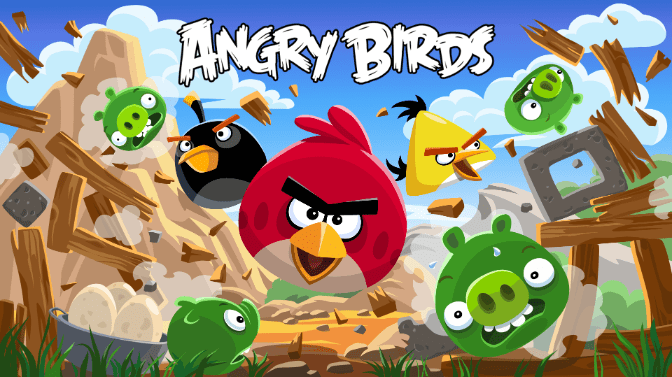


More than anything, I believe the above proves how scummy profiteers can be in the creative world.
So if you give away your best ideas, even to people who seem to be your friends, you might just find yourself the bag holder. With the advent of generative A.I. and the diminishing value of money, holding onto your best ideas has never been more important. (That also means not posting your story ideas on cloud-based platforms.)
The way things are going, original ideas could well become the only currency of the future.
 Nick Enlowe