I’ve gotten an influx of new followers lately. And with that came a surprising number of questions!
I thought I’d share some of the Q&A I’ve recently received so you can get to know me better.
Who is Nick Enlowe?:
I am an author of high fantasy, dark fairytales, and sword & sorcery (heroic fantasy) stories. Born in a small town in Central Illinois, I now reside in the picturesque Ozarks with my wife and two children. My writing draws inspiration from a wide array of authors including Leigh Brackett, C.S. Lewis, J.R.R. Tolkien, Tad Williams, Gene Wolfe, Robert Jordan, C.L. Moore, Neil Gaiman, and Robert E. Howard.
I intend to reinvigorate the high fantasy genre by challenging the status quo and tapping into the sheer creativity one could still find during the pulp era. I want all writers to strive for this level of freedom when they create while aiming for emotional resonance, eucatastrophe, and catharsis.
A lot of damage has been done to high fantasy by the likes of Hollywood and George R.R. Martin, but I still feel it is the best genre, and that it can be brought back from the dead.
I am also an accomplished digital artist, having studied graphic design at Columbia University of Chicago. My Bachelor’s degree, however, is in Computer Science, and I am currently an IT Systems Administrator.
When I’m not writing or drawing, you might find me reading, playing piano or guitar, or enjoying my vintage video game, pulp, or comic book collections.
What inspired you to write?:
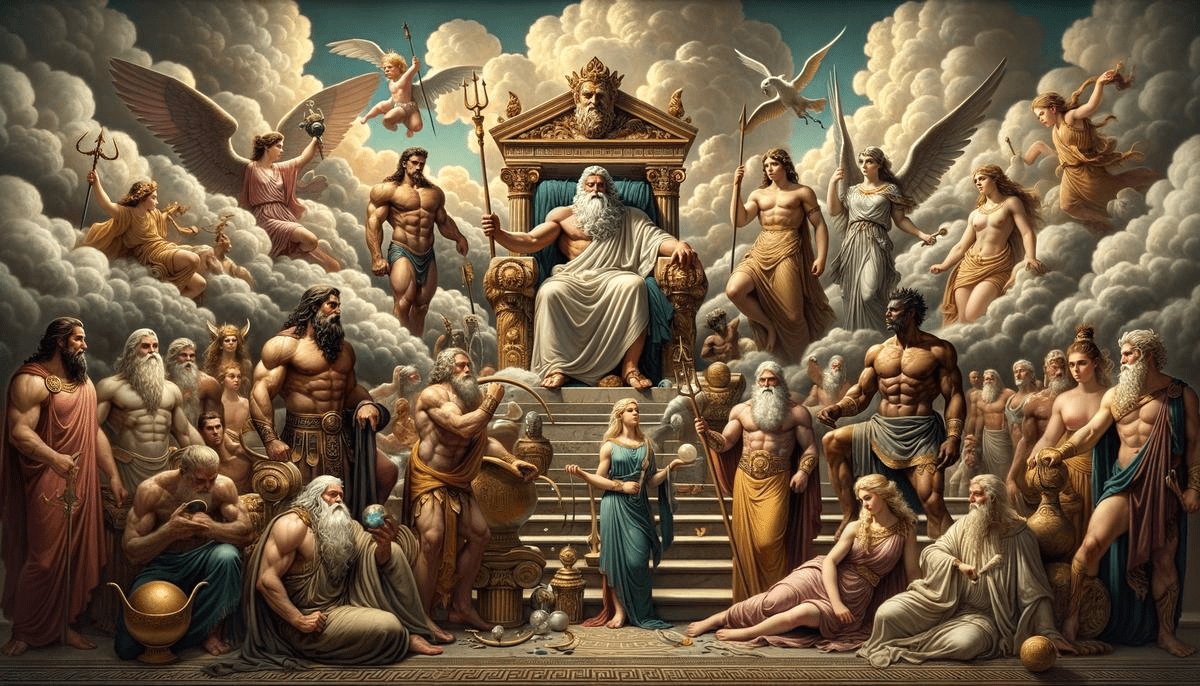
When I was young, I was a voracious reader. I gobbled up every Narnia, Choose Your Own Adventure, Hardy Boys, and Three Detectives book I could get my hands on. I was also obsessed with Greek and Roman mythology, researching the pantheon of the gods right alongside The Iliad and the Odyssey as early as first grade.
Heavily inspired by 1980s fantasy films such as The Neverending Story and Legend, I kept a daily handwritten journal and typed out stories on my dad’s 1983 ComputerLand computer (running MS DOS 2.0 with WordPerfect – I could type a flawless 40 WPM by second grade).
I’d won two writing contests by fourth grade and my work got printed in the newspaper. But in fifth grade, my teacher accused me of plagiarism, which hurt me deeply.
It turned out to be the first punch of a one-two blow: That Summer, my family moved us away from the only hometown I ever knew… and I was not welcomed in my new school. This discouraged me from writing and reading altogether.
I rediscovered my love for books later in life through Sherlock Holmes, Watership Down, The Maltese Falcon, and The Screwtape Letters, among many other wonderful books. The Hobbit in particular was pivotal, as it gave me my first taste of high fantasy – leading me right into the Lord of the Rings.
But shortly after graduating high school, I was kicked out of my home and left homeless (all due to a horrible misunderstanding), and it took me many years to recover from all the financial and emotional damage that caused. I worked hard, however, and paid my way through college on my own, finally graduating with honors and getting married.
Around 2007 I came across the first Wheel of Time book. And as I read through that series in particular, it made me fall in love with writing again.
How long have you been writing?
After my bad experience in fifth grade, I stayed away from writing fiction until late 2007 on a day where inspiration suddenly struck me. It was a lush, high fantasy description of a location I had dreamt up called “Whiteshore”.
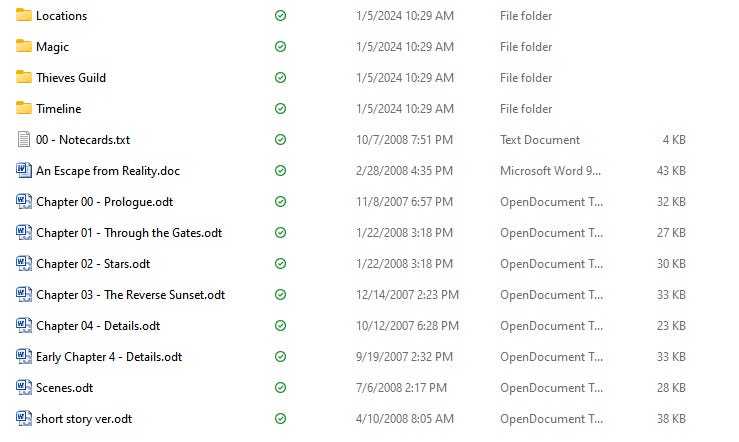
My first serious complete short story was written in 2009.
I didn’t reach “the end” of a large manuscript until around 2017.
During that time I’ve been through a lot, including ghostwriting and professional editing gigs. I’ve also done over 1,000 crit exchanges.
Life and procrastination got in the way many times, but these days I feel ready to fully dedicate myself to the craft.
Do you have any short stories published anywhere?:
Outside of my own website, no.
I do have a few samples posted here, as well as this complete short story.
Do you currently have any books available for sale?:
While there is an artbook out there with my name attached to it, purchasable on Amazon, I don’t have any prose available there. Yet.
Do you have any stories ready for publication?:
Yes. And I have several manuscripts that are close to completion. (I may even have cover art that I have not yet revealed!)
Why do you think you haven’t had luck with getting a short story published?:
Hard to say. I’ve just gotten form rejections. But I’ve only made two attempts so far with one particular story. I’m not worried yet and intend to keep trying.
However, if you want an unflinching speculative analysis on why I haven’t gotten published yet, it can be found here.
When are you launching?:
No hard dates set; I’m nesting my completed manuscripts, waiting for a short story to land first.
What are you currently working on?:
I’m always working on several stories at once to some extent, but I am currently focused on a Sword & Sorcery serial called Khaniel the Sojourner (pronounced Khan-yuul — which means “(Only) God Is My Judge”). I intend to get at least one of these tales published in a print magazine.
While each tale should work as a stand-alone, I have an overarching plot that allows them to come together as a collection, Howard Andrew Jones-style.
What is Sword & Sorcery, and do all your stories feature magic?:
Quickly put, S&S is a subgenre of fantasy that has a sharp focus on action and adventure. Typically, a lone hero must navigate a dangerous world littered with creatures, magic, ancient ruins, and mysterious artifacts.
I’ve already written a blog post on what Sword & Sorcery is. So if you’d like a deeper dive and a more detailed analysis of S&S, be sure to check that link.
Some of my stories weigh in as “high fantasy” (lots of magic), while others might qualify as “low fantasy” (magic is subtle). But there’s always at least some element of magic to each of my tales.
Sword & Sorcery can fall on either side of the magic spectrum. The ability to cast magic can be as common as the air we breathe… or a rare gift to covet. While it can be subtle, it’s typically devastating, dangerous, and adds to the spectacle.
What is “verisimilitude”?:
I mentioned this word in my series on the Pyramid of Abstraction, and someone asked me for clarification.
Verisimilitude is how real or true your world seems to the reader.
Readers are willing to suspend their disbelief from the moment they pick up your book, but they will give you about three strikes (especially if they are in quick succession) before they get pulled out of the story and set the book aside for good (or continue to hateread in irritation).
Fiction writers must master the crucial balancing act of selling their world as real to maintain this delicate suspension of disbelief, and utilizing the Pyramid of Abstraction is one of the best ways to achieve it.
Building up the details of your world and the backstories of your characters helps achieve a sense of realism, but withholding some of that information on purpose implies there’s a much bigger world beyond the page, breathing even more life into it until it feels “greater than the sum of its parts”.
These “strikes” can just as easily occur from fouls in the plot and dialogue. For example, moments of too-convenient happenstance, inconsistencies, or the accidental insertion of modern anachronisms can pull readers right out of a book. So, too, can plotlines that stick too close to what’s expected, making your story too predictable.
The ultimate goal is to create stories that are engaging, immersive, and believable enough to maintain the reader’s suspension of disbelief.
The rule of thumb is invitation before explanation. Overdo it and you’ll not only fall into purple prose territory, but you’ll rob your world of its own mystery and intrigue.
CONCLUSION
You have no idea how much the simple act of reaching out means to me.

THANKS SO MUCH for all the questions and warm wishes, and THANK YOU for showing interest in myself and the projects I’m working on when you didn’t have to.
If you have any more questions, feel free to comment & ask!
 Nick Enlowe
One thought on “Q&A & Verisimilitude”