
Did you know whenever you read fiction, you’re actually dreaming? Don’t believe me?
The more realistic and interactive a dream feels, the more you want to stay in that dream, right?
Isn’t it the worst when you wake up from a vivid dream that ended on a cliffhanger? You almost want to go back to sleep to see if you can continue where the dream left off, but that seldom works.
That’s exactly why cliffhangers, mysteries, and hooks work so well in storytelling.
In fact, hooks and mysteries lull the reader deeper into your story. Clever uses of the Pyramid of Abstraction–especially the fourth level–can bring it all to life, making it feel vivid and real.
ENTERING THE FICTIVE DREAM

One of the main reasons the dream-like Star Trek fan film 765874 – Unification delivers such an emotional journey (and went viral despite being unlisted on YouTube) is due to its heavy use of the 4th level of the Pyramid of Abstraction and its adherence to “invitation before explanation“.
The other reason, of course, is because it delivered a neglected and long-needed denouement for Captain Kirk in its last moments.
Most agree this short film is the way Generations should have ended.
But those early pyramid moments, like the ones pictured above where Kirk brushes his fingers against the plants and feels dewdrops trickle into his cupped hand, are invitations – They captivate and invite viewers into the narrative to help them reach that final payoff. The pyramid doesn’t just ask–It compels the viewer to stick around.
Mind, writing is more dependent on this sort of thing than film. A quick establishing shot is more than enough to get things moving in your typical sitcom, for instance.
But in Unification’s case, the choice to use 4th level of the pyramid is necessary and deliberate, as the entire short is set in a dreamscape with next to no dialogue and emotions are cranked to 11; the sort of setting which can only benefit from more grounding.
If written fiction is itself a dream, we’ve got more to gain than lose by using it.
In your writing, if you balance a reader’s suspension of disbelief and build verisimilitude, following the rule of “Invitation before Explanation”, you’ll have created an escape people love to get caught up in and won’t want to leave.
So allow me to put your mind at ease. Your mission as a writer is very simple:
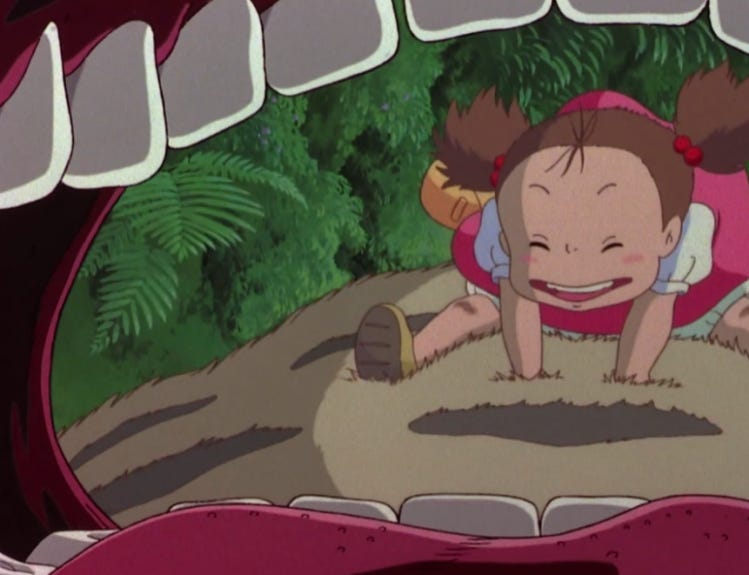
When readers pick up your story, they enter what is called the Fictive Dream.
Your goal is to make sure they don’t want to wake up.
And that’s it. That’s what it all boils down to. The simple clarity of this conclusion can take decades to arrive at. You won’t find it in most How To books.
That’s what writing compelling fiction is all about. Think about what makes you want to hit the snooze button in an effort to continue a dream you just don’t want to wake up from. Do that in your fiction.
Everyone beats around the bush when trying to tell you this. They tell you to try and write page-turners, to end your chapters on cliffhangers, to make your world believable. But boiled down, this is what they actually mean.
If you can create compelling characters, settings, plot, and dialogue, and make it all believable, the Fictive Dream is where you’ll focus your attention. This is how you keep your eye on the prize, how you keep an editor or agent from wanting to set aside your manuscript.
And it comes with practice. Lots of practice.
But once you’ve got it down, the world is your oyster.
 Nick Enlowe
One thought on “Beyond the Pyramid: The Fictive Dream”