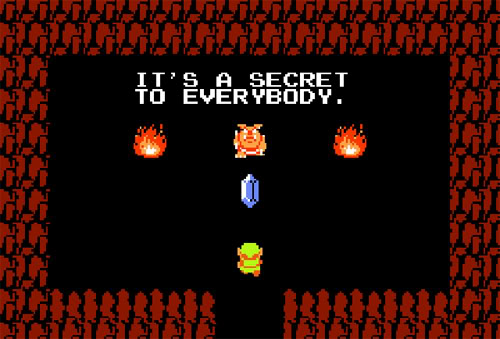
There’s a secret to silence. In fact, it absolutely used to be a “secret to everybody”. Not so much anymore.
Silence is powerful, you see. It’s an immensely powerful tool for writers, just as it is within many professions.
And the power of silence goes beyond the peace and quiet one may wish for when writing, the desire to be alone with one’s thoughts.
It goes far deeper than the old Swiss proverb “Speech is silver, silence is golden.”
If you prove to others that you can keep a secret, it can open doors. Although, too often, they’re the wrong doors. None-the-less, knowledge is power, just as they say.
Staying quiet can make you seem smarter than you actually are. It certainly serves to make you more observant, as well as a good listener.
And it would do more harm than good for writers to openly talk about their plot twists and endings. I touched on the power of silence briefly when I mentioned that telling someone about what I’m going to write does me no favors. In fact, a failure to keep silent can even be the main cause of writer’s block.
When you’re entrusted with a secret–morality pending–you should take such secrets to your grave. Silence is more than golden. Silence is trust.
But most insidiously, silence allows hidden agendas to be achieved, and allows secrets to be hidden in plain sight. One thing you’ll never hear tradpub folks admit is that this kind of secret knowledge is a good way to get your manuscript beyond the slushpile. If your manuscript proves you’ve bitten the apple of forbidden knowledge, you’re far more likely to get a call from the Devil … I mean … from a tradpub representative.
None-the-less, it’s not a bad idea for even a superversive indie author to learn a thing or two about old world history, mythology, and perhaps a bit about “magick”, if only to better understand the deeper meaning hidden in existing fantasy works. Even C.S. Lewis had this kind of knowledge and employed it quite often in his Chronicles of Narnia books. (But just don’t fall in, okay?)
Successful artists who know secret things but are too immature to handle it (a.k.a. “bohemians”), tend to develop a superiority complex. They love to dangle secrets just out of reach of the general public and laugh. They often get a little too bold, however, and let the mask slip, almost as if they want to get caught.
Alan Moore, of Watchmen fame, is one such person. Moore is so out-of-touch with his audience, the most popular character he ever created was meant to be nothing more than a strawman he wanted everyone to universally hate. Makes me chuckle.
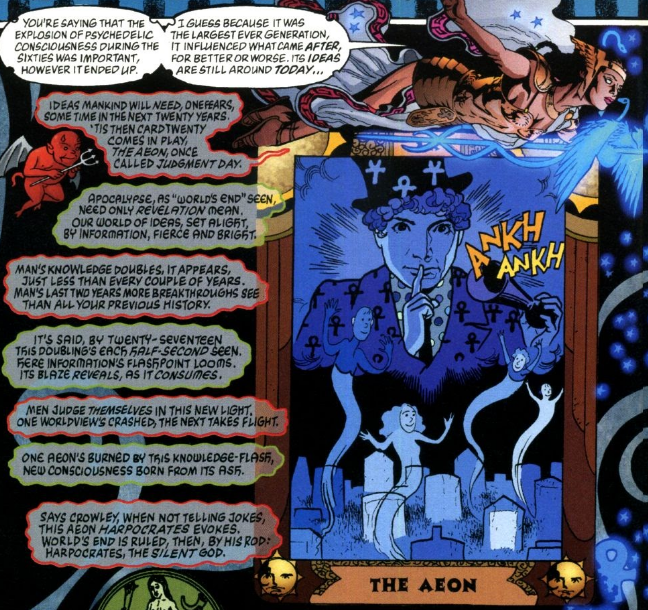
He also created a comic in 1999 called Promethea, which, much like Neil Gaiman’s Sandman, is layered with the teachings of Hermetic Qabalah.
I’m going to leave you with this panel from Promethea (issue #12, 2001). Can you decode the layers of hidden meaning within? (Don’t feel bad if you can’t decipher much.) This conversation will continue as we delve further down this rabbit hole.
 Nick Enlowe
10 thoughts on “Silence is a Rabbit Hole”