
What is a magus? In post-Biblical modern times, a magus is a philosopher, someone who has magician-like abilities due to their wisdom. But we’ve already established that a magus has a false, inverted sense of wisdom. So, if you guessed they generally use their form of magic for ill purposes, you’d be right.
Hermetic Qabalah/Thelemic mysticism spread throughout the upper crust of the U.S. thanks in part to the Frankist movement, along with the help of infamous figures such as Madame Blavatsky and Aleister Crowley.
Thomas Edison owned an extensive library of books, but it was one of Madame Blavatsky’s that he chose to keep within arms’ reach: He loved it so much, it famously never left his desk.
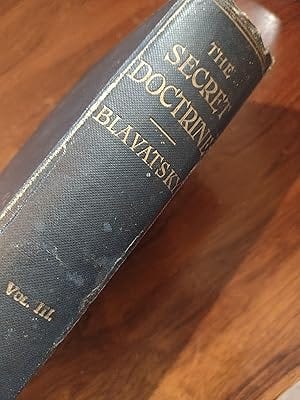
Blavatsky, a Thelemite and Theosophist, wrote about the philosophy of the caduceus and many other mystery school teachings. Edison felt Blavatsky’s teachings were not only important, but crucial to his work.
The word thelema means “to will, wish, want, or purpose.” And that’s exactly what practitioners of Thelema do: Whatever they want, morals be damned.
The past is in the past, they say. It cannot change. The present is the current situation, and changing the current situation is slow. It takes time.
But the future? Well, the future is malleable. Any Thelemite knows this. They visualize the future they want and do whatever it takes to make their vision a reality, often by any means necessary.
The art of the magus is to lie and lie some more. The goal is to keep lying until it becomes “truth”. The magus rewrites your history books, your science books, creates the manipulative commercials and movies you see, decides trends, designs your children’s school curriculum, and engineers how pop culture will affect the plebeians.
They believe lying to alter the future is a very real form of magic.
The magus knows how to keep a secret, and knows there is magic in doing so. That’s precisely why you don’t tell anyone your birthday wish as you blow out your candles: If no one knows your intentions, your wishes are far more likely to come true. Why? This is better known as scheming, and there’s hardly anything magical about it.
Plato’s Allegory of the Cave
Plato wrote of a cave where people had been chained up their entire lives, staring at a flat cavern wall. A fire roars behind them, casting shadows.
To keep themselves entertained, the prisoners would watch the shadow puppet show and get emotionally invested in the distraction. They would often live their whole lives never realizing they’ve been chained.
Plato explained that the cave is the prisoners’ entire reality, and only “philosophers” are able to cast aside their chains, step outside this cave, and see the world the way it truly is.
Others may stumble outside from time to time, but what they see frightens them. They shield their eyes and run back to the comfort of what they know.
According to Plato, only philosophers can look upon the world outside the cave and understand the natural sciences and mathematics at work. Only philosophers have the ability to use deductive logic, because only they can understand that the shadows are formless, and ultimately serve as a distraction.
This allegory should remind you of all the people who stay glued to their TVs and smartphones, or believe everything they hear on the news. These people are surprisingly easy to manipulate.
As a magus, all one needs to do is keep manipulating the pretty shadow puppet show, triggering emotional responses when needed. By doing this, a magus can make any future they want a reality, especially through social engineering and laws. It’s a slow process, but it’s also inevitable.
A lie that is often repeated is that the United States is a democracy. Therefore, things the magi don’t like get labelled as “threats to Democracy”.
Even our superheroes speak of democracy like it’s the shining pillar that holds the United States back from total collapse.
But what if I told you our country was never a democracy? It is instead a Federal Republic. Well, until recently. The lie has been repeated often enough that it has now become closer to the truth.
Benjamin Franklin famously replied to a concerned citizen who asked, “Well, Doctor. What have we got, a Republic, or a Monarchy?” Franklin replied,
“A Republic, if you can keep it.”
The history books lie about this quote, saying he meant a Democratic Republic (You know, like the Democratic Republic of the Congo.)
But that’s not true. Our country was founded as a Federal Republic, and Franklin knew that. He also knew that, over the course of time, tyranny would one day come … most likely under the guise of democracy. He knew of the allegory of the cave, and he knew that the population of “cave people” would grow over time.
Like Edison, Franklin knew that the larger a shadow puppet-loving population grows, the easier it is to emotionally manipulate them into acting against their own self-interests.
And within a pure democracy, all you need to do is convince about 15-20% of the population of something–and make them emotional about it–to make it appear like it’s the majority’s opinion.
That’s why countries with a strong moral compass and strong cultural identity are the most difficult for a magus to break.
In that case, the magus must play the long game, dividing its people against each other and sewing confusion through lies, before going in for the kill strike.
I shouldn’t have to say this, but question everything. Use critical thinking. If something you’re told feels like it was meant to elicit an emotional response, check your emotions.
Approach all you take in with a healthy dose of skepticism, from learning what the Statue of Liberty is supposed to represent, to what you hear about the latest fad diets.
Uncle Andrew, Magus Extraordinaire
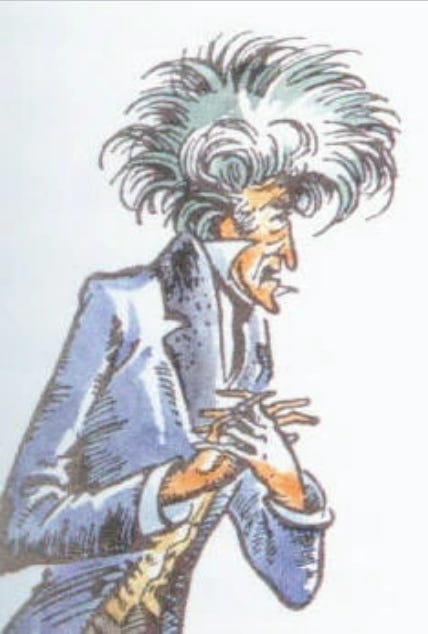
Do you remember Uncle Andrew from The Magician’s Nephew?
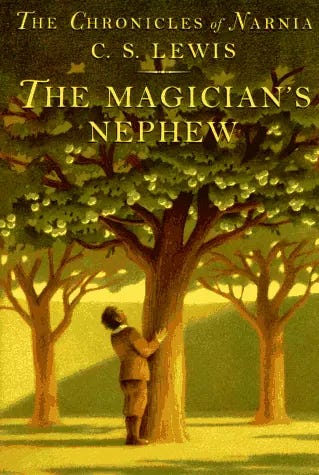
C.S. Lewis was trying to teach you of the dangers of the magus through this character.
“Rotten?” said Uncle Andrew with a puzzled look. “Oh, I see. You mean that little boys ought to keep their promises. Very true: most right and proper, I’m sure, and I’m very glad you have been taught to do it. But of course you must understand that rules of that sort, however excellent they may be for little boys—and servants—and women—and even people in general, can’t possibly be expected to apply to profound students and great thinkers and sages. No, Digory. Men like me, who possess hidden wisdom, are freed from common rules just as we are cut off from common pleasures. Ours, my boy, is a high and lonely destiny.”
After hearing his uncle’s puffery, Digory concludes that all Uncle Andrew’s words mean is, “that he thinks he can do anything he likes to get anything he wants.”
And as Uncle Andrew continued to brag about his wisdom, about having explored the world outside of Plato’s cave, Lewis showed he understood deeply the very dark side of these teachings:
“Meanwhile,” continued Uncle Andrew, “I was learning a good deal in other ways (it wouldn’t be proper to explain them to a child) about Magic in general. That meant that I came to have a fair idea what sort of things might be in the box. By various tests I narrowed down the possibilities. I had to get to know some—well, some devilish queer people, and go through some very disagreeable experiences. That was what turned my head grey. One doesn’t become a magician for nothing. My health broke down in the end. But I got better. And at last I actually knew.”
Sadly, this philosophy—and its consequences—are anything but fiction.
Ultimately, the Allegory Doesn’t Work
The problem with Plato’s allegory is that it is those who like to hide in darkness that prefer the sanctity of a cave. Those who harbor secrets. Plato wanted to cast being a philosopher as romantic and liberating.
But the reality is, the deeper you sink into alchemy, philosophy, Thelemics, and the like—the more of a “magus” you become—the deeper and darker into the cave you must go.
And you can wind up so deep in the cave, you may never come out and see the light of God again.
This is another of the magus’ tactics: Teach the inverse of truth.
Rather, it is the good people who are outside the cave, living in the real world, appreciating nature as God’s creation. The good people of the Earth are not scheming against each other to change the future, and many are not as distracted by shadow puppet shows as it may seem to the elites. They can live in the daylight because they have nothing to hide.


10 thoughts on “The Art of the Magus and the Allegory of the Cave”