
Where we ended our recap last time, Atreyu, riding Falkor, had just wished upon the Auryn.
“If the Ivory Tower still stands, take us there.”
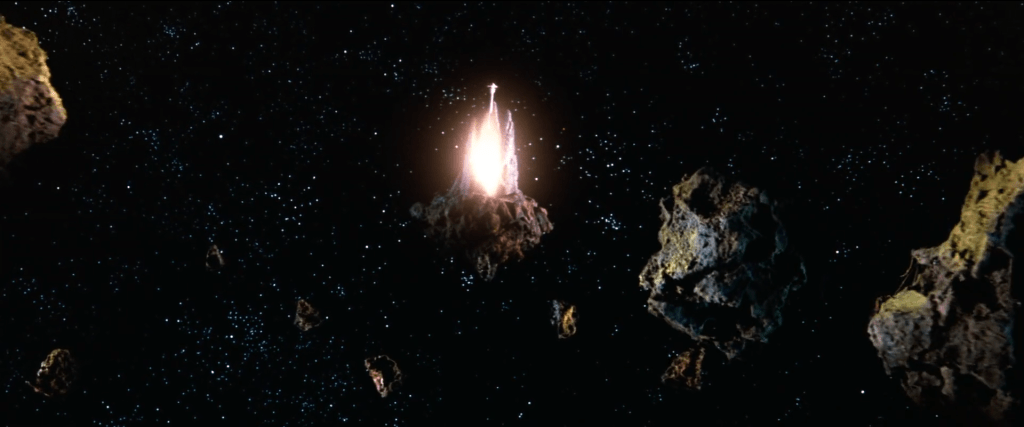
Lo and behold, the power of the Luck Dragon holds once again – Or perhaps it’s the power of the Auryn this time? Maybe a little of both? Either way, the pair approaches the tower, awestruck.
Occult Lens: Meanwhile, Bastian looks every bit the alchemist as he takes a bite from his apple and pours over his magic book by candlelight, all propped by a chemistry set. (The word “chemist” comes from “Al kemi.”) This heavy-handed imagery, combined with the fact that the Auryn glowed moments before the Ivory Tower appeared, all but confirms the miraculous state of the tower was the work of the double ouroboros.
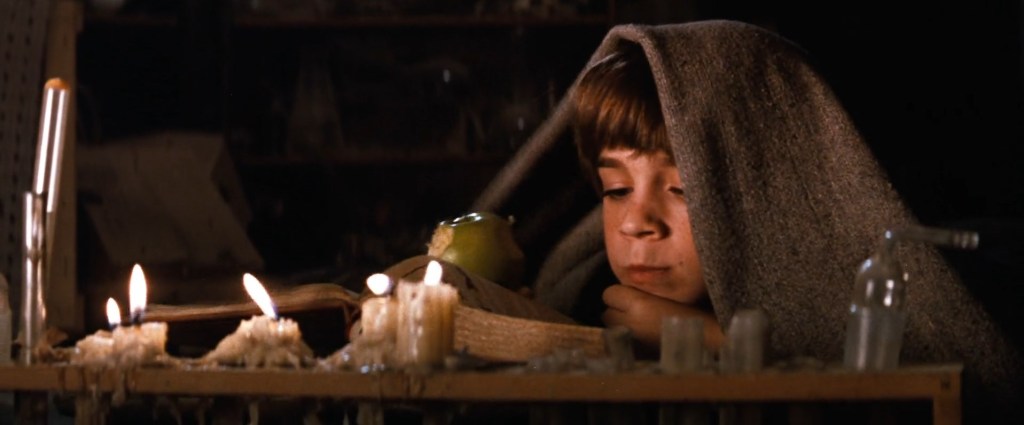
The Auryn is the extension of the Will of the Creator, the person reading the book.
The influence of the novel writer, Michael Ende, is abundantly clear here. (Remember, the word “thelema” means “to will, wish, want, or purpose.” To an alchemist, willing something into reality by telling lies IS magic. Writing fiction is an exercise in willing dreams to reality, so creative writing is quite sacred to believers.) This is meant to be an indication that Bastian’s upper and lower natures are coming into balance.
THE CHILDLIKE EMPRESS
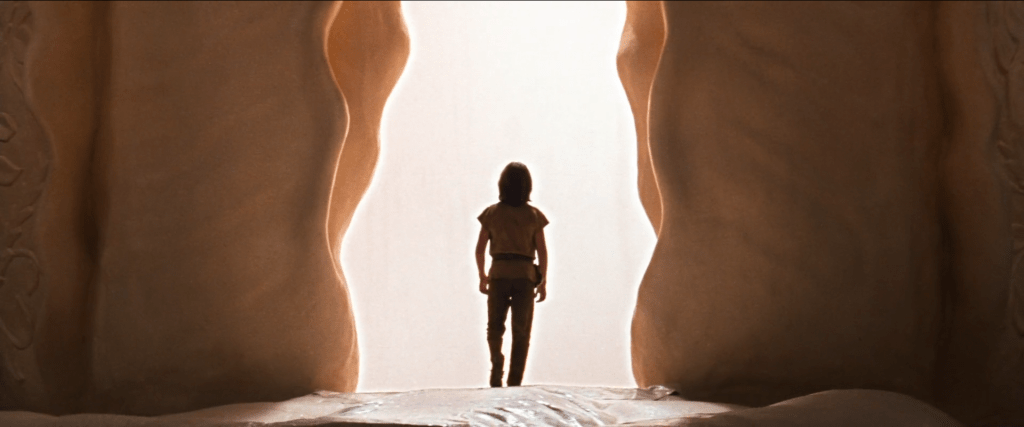
Atreyu nervously approaches the inner sanctum of the rose-shaped tower, which is filled with the glow of enlightenment – The Holy of Holies.
Here, we see for the first time the perfectly-cast Childlike Empress; The mysterious girl with no name who sits at the center of Fantasia.
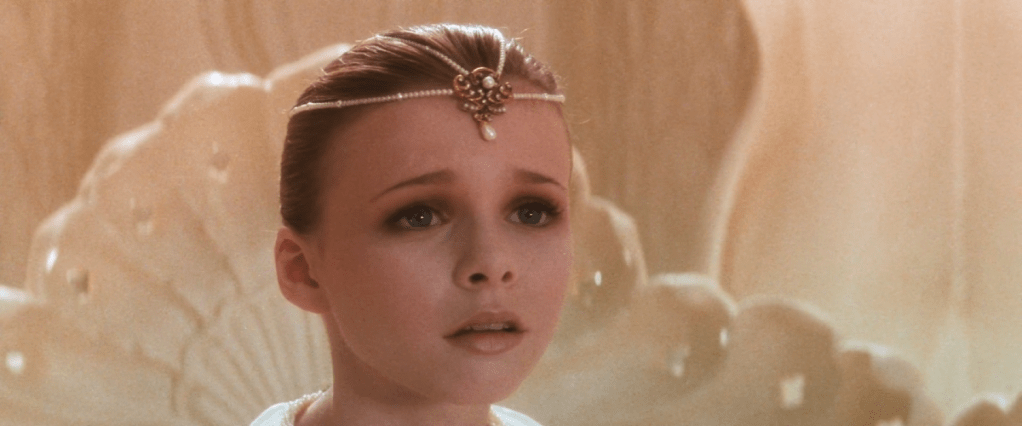
“Why do you look so sad?” she asks, her eyes filled with disarming amounts of empathy. She asks this question with a childlike innocence, as if completely unaware of the state of destruction and hopelessness surrounding them both. It makes sense, given that she’s in a literal ivory tower.
Atreyu removes the Auryn and returns it to her, proclaiming he has failed her.
“No, you haven’t,” she answers. “You’ve brought him with you.”
Fourth Wall Break: She soon clarifies she means the Earthling child – Bastian, and conveys a smile of hope; The very thing Fantasians needed most. The very thing Atreyu needed most.
Atreyu is rocked to his emotional core, stunned she knew about the Earthling at all. But she reveals she knew everything. About Atreyu’s struggles, of his journey. Even of Bastian’s pain.
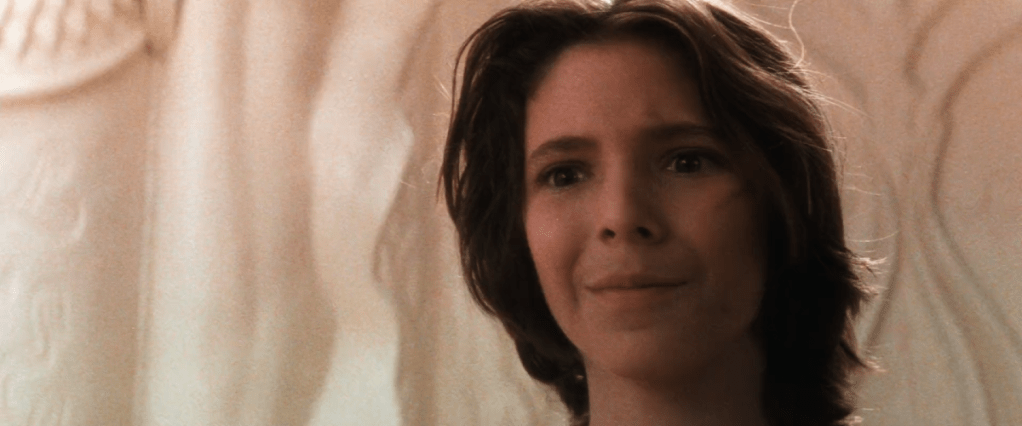
The Childlike Empress explains Bastian had suffered alongside Atreyu this whole time. He was with Atreyu when Artax was lost, and with him through every moment of joy and suffering since.
Occult Lens: Atreyu and Bastian are symbolic of the “upper and lower natures”. And of the “dual Jesus” belief that comes from Anthroposophy.
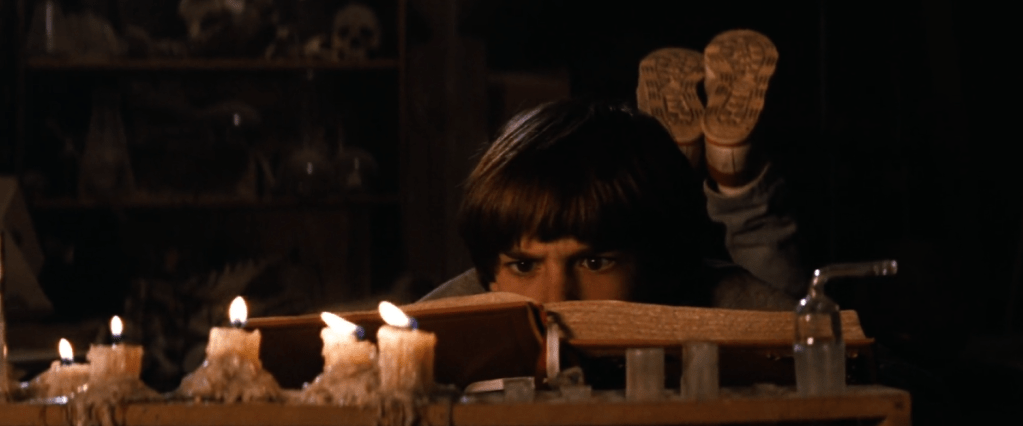
Bastian can’t believe what he’s reading. The book appears to be breaking the fourth wall again. But a book can’t do such a thing. It can’t communicate directly with the reader. Can it?
At this moment, Bastian’s imagination fights him. The floating rocks outside–the remnants of Fantasia–begin to collide with one another, and the structural integrity of the Ivory Tower is threatened.
“Where is he?” cries Atreyu as the Ivory Tower cracks apart at the seams. “If he’s so close, why doesn’t he arrive?”
Childlike Empress: He doesn’t realize he’s already a part of the Neverending Story.
Atreyu: The Neverending Story? What’s that?
Childlike Empress: Just as he is sharing all your adventures, others are sharing his. They were with him when he hid from the boys in the bookstore.
Bastian: But that’s impossible!
Childlike Empress: They were with him when he took the book with the Auryn symbol on the cover, in which he’s reading his own story right now.
His own story.
Bastian flees from the book, peering into the storm outside.
I can’t believe it. They can’t be talking about me!
It’s impossible to deny any longer. The book was too specific with the details of his real life for there to be any more room for doubt.
Double Fourth-Wall Break: This is the first concrete proof Bastian has heard that they are indeed talking about him. But he’s only partially right. We have a second Fourth-Wall Break, this time through the movie screen itself.
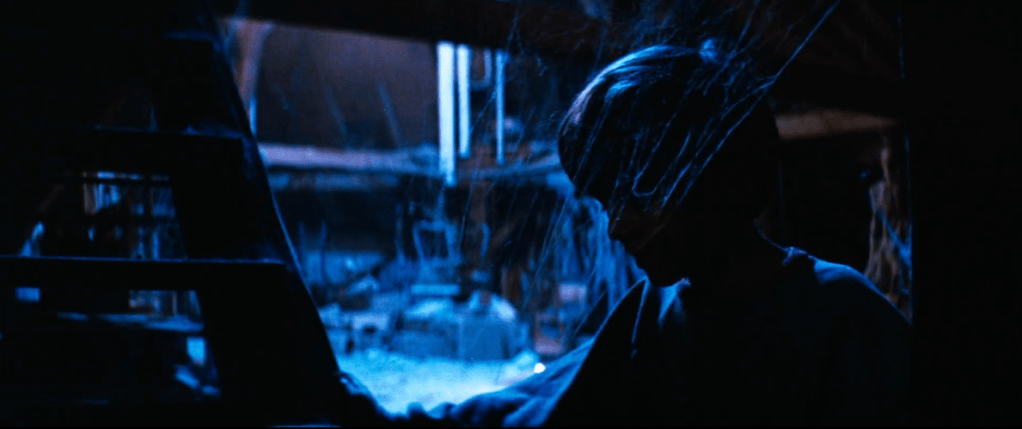
When the Childlike Empress mentions the “others” who shared Bastian’s story, think carefully about who or what she means. (“Just as he is sharing all your adventures, others are sharing his.”)
The Empress is speaking of the people watching the movie at that very moment. If you’re watching the movie, she’s speaking about you.
So by a “double” fourth-wall break, I mean there’s a break as the Empress’ words travel through the book and through the screen to refer to the audience.
Modern Lens: This is an extremely interesting and unique moment, both storytelling-wise and cinema-wise. It doesn’t come off as a mere gimmick. This scene makes perfect sense for the story and is madly underrated precisely because it’s so deep, meaningful, and ground-breaking. In my opinion, this scene made nothing less than cinema history.
I credit Michael Ende for creating a potent soilbed for such an interesting concept to emerge forth, and I credit director/scriptwriter Wolfgang Petersen for elevating it to the next level.
Bastian’s realization throws the remnants of Fantasia into even more turmoil. His creativity is fighting him, wanting to resist, wanting to get lost in the misery of his mother’s death. Wanting to sink back into the Swamp of Sadness.
Atreyu: What will happen if he doesn’t appear?!
Childlike Empress: Then our world will disappear. And so will I.
Atreyu: How could he let that happen?!?
Childlike Empress: He doesn’t understand that he’s the one who has the power to stop it. He simply can’t imagine that one little boy could be that important.
Bastian struggles desperately with every further word he reads. There’s no way the Empress could really mean him. He’s just a boy, after all. A consumer. Not a producer. He’s just the reader of the story. Not the creator. He can’t be so special.


One thought on “How The Neverending Story inspired me to write: Part 12”